RayNeo Launches GT Max Call of Duty Edition and Expands Its AR Glasses Lineup
RayNeo launches a $449 GT Max Call of Duty edition with a 59-degree field of view, 120Hz Micro-OLED displays and native 3DoF tracking.
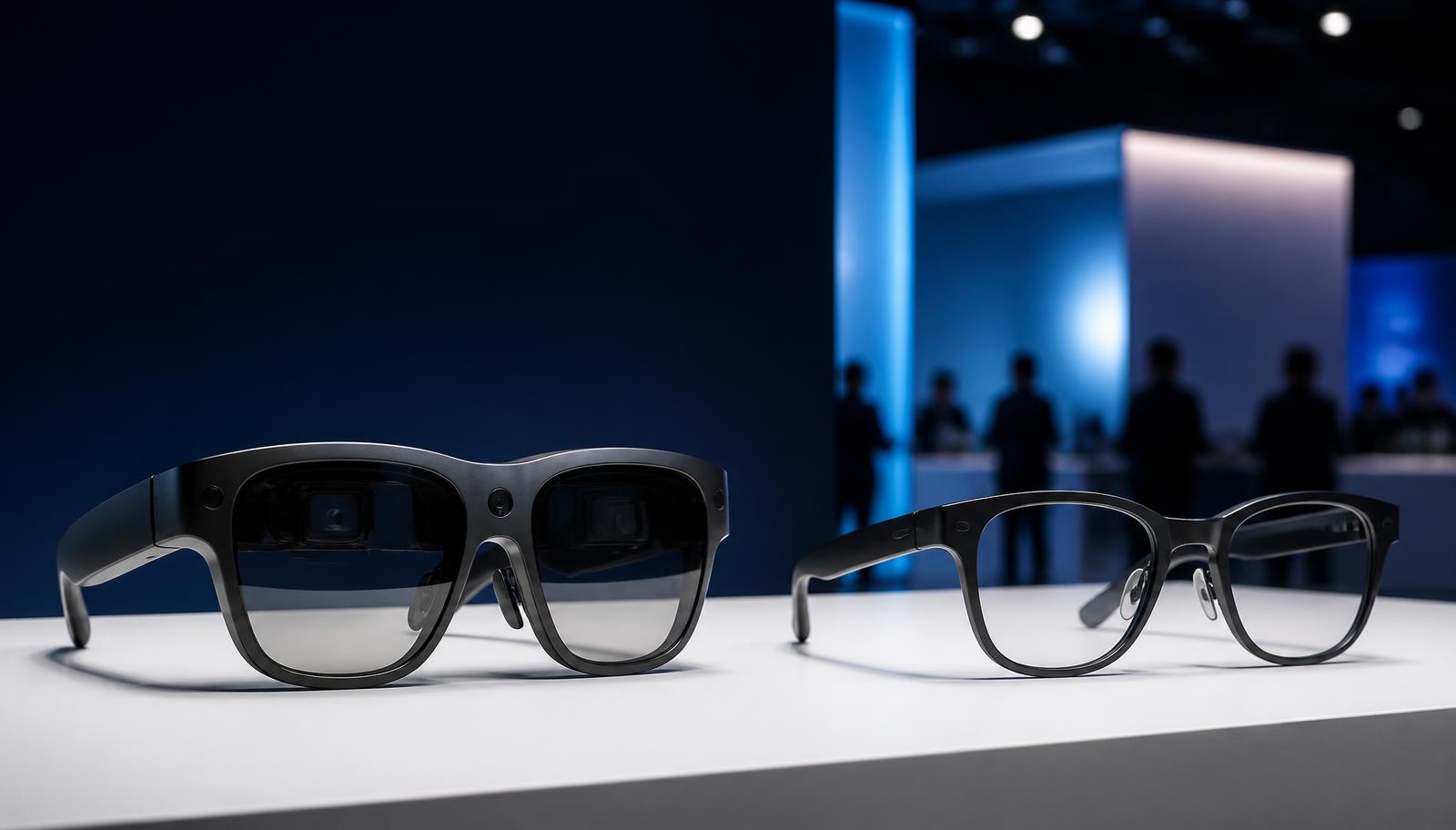
Archive image of RayNeo's GT Max from IFA 2026; not the Call of Duty limited-edition finish.
Key takeaways
- RayNeo announced the GT Max Call of Duty: Modern Warfare 4 Limited Edition on November 18, 2026, with US availability from November 19 at $449.
- The wearable display offers a claimed 59° field of view, 120Hz Micro-OLED panels, 1,200 nits perceived brightness and 38 pixels per degree.
- Native 3DoF tracking via Zone 360 hardware supports Pinned, Steady and Follow screen modes, but not full positional tracking.
- The edition adds a digital camouflage finish and a custom black-and-gold on-screen display; it adds no in-game content.
- RayNeo also added walking and cycling navigation to iO and plans a public iO SDK in December 2026.
On this page
RayNeo introduces a gaming-focused edition of its GT Max glasses
The market for wearable displays continues to expand beyond general-purpose entertainment. Manufacturers are developing glasses designed specifically for gaming, productivity and portable media consumption. On November 18, 2026, RayNeo announced the GT Max Call of Duty: Modern Warfare 4 Limited Edition, a special version of its existing GT Max wearable display. The new edition is scheduled to become available on November 19 through RayNeo's official store and Amazon US.
Priced at $449, the product combines the GT Max display hardware with a redesigned exterior and a customized gaming interface. The announcement is part of RayNeo's broader November product campaign, which also includes updates to its AI-powered iO glasses and promotional pricing across its existing XR portfolio. The GT Max Limited Edition is a new commercial variant rather than an entirely new headset architecture.
A wearable display rather than a standalone VR headset
The GT Max belongs to the category of wearable display glasses. Unlike immersive virtual reality headsets, the device is designed to display content from compatible external hardware. Its primary purpose is to provide a large virtual viewing surface for games, films and other screen-based applications. This distinction matters because wearable display glasses do not necessarily provide the same interaction capabilities as six-degrees-of-freedom VR headsets.
The GT Max supports three-degrees-of-freedom tracking. This allows the system to respond to rotational head movement. However, it does not provide full positional tracking equivalent to a conventional room-scale VR system. The glasses are intended to support gaming and media consumption without requiring users to wear a larger immersive headset.
A 59-degree field of view
RayNeo's GT Max uses the company's Peacock Optical Engine 3.0 Max. The optical system provides a claimed 59-degree field of view. Field of view describes the angular extent of the visible display. A wider field of view can make a virtual screen occupy more of the user's visual field. RayNeo advertises a virtual screen equivalent to up to 307 inches. That figure describes the apparent screen size under the manufacturer's viewing assumptions, not a physical display measuring 307 inches.
The perceived size depends on the optical configuration and viewing geometry. The company positions the GT Max as a portable alternative to large conventional monitors for compatible gaming systems.
120Hz Micro-OLED displays
The glasses include Micro-OLED display technology with a refresh rate of up to 120Hz. Refresh rate describes how frequently the displayed image can update each second. A higher refresh rate can improve the appearance of fast-moving content when the source device and application support it. This can be particularly relevant to action games. RayNeo also advertises 1,200 nits of perceived brightness and 98% coverage of the DCI-P3 color gamut.
The manufacturer lists an angular resolution of 38 pixels per degree. These specifications describe different aspects of visual performance. Brightness affects visibility. Color-gamut coverage indicates the range of colors the display can reproduce. Pixels per degree describes angular image detail. However, these values are manufacturer specifications. Actual image quality also depends on optical alignment, display calibration, source resolution and individual visual characteristics.
Native 3DoF spatial tracking
One of the GT Max's principal features is integrated 3DoF tracking. RayNeo uses dedicated spatial processing hardware called Zone 360. The system allows users to choose how the virtual screen behaves in relation to head movement. The manufacturer describes three operating modes.
- Pinned Mode: Keeps the virtual display positioned in a selected direction
- Steady Mode: Stabilizes the displayed image during movement
- Follow Mode: Allows the screen to follow the user's viewing direction
These modes address different viewing situations. A stationary user may prefer a screen that remains positioned in front of a particular area. Someone traveling may benefit from stabilization. Another user may prefer the screen to remain directly in front of their eyes. RayNeo states that the tracking operates through dedicated hardware without requiring the connected host device to perform the same processing. The glasses should not, however, be confused with systems that track full physical movement through a three-dimensional room.
A customized Call of Duty interface
The limited edition introduces a new visual identity. The exterior features a digital camouflage finish. RayNeo has also included a customized black-and-gold on-screen display. This interface replaces the standard GT Max menu. Users can access settings such as brightness, display configuration and visual profiles without leaving the connected game. The available profiles include Standard, Movie, Eye Care and Read. The interface also provides information about the current display configuration.
These changes are specific to the limited edition. The announcement does not establish that the glasses provide exclusive in-game content, competitive advantages or a new rendering engine. The collaboration primarily concerns hardware styling and the wearable display's own interface.
Audio developed with Bang & Olufsen
The GT Max includes four speakers. RayNeo states that the acoustic system was co-tuned with Bang & Olufsen. The company positions the system for gaming and multimedia playback. Audio quality is relevant to wearable displays because users may want to avoid additional headphones. However, built-in speakers introduce different considerations from enclosed headphones. Environmental noise, sound leakage and the position of the glasses can influence the listening experience.
The manufacturer describes the audio as optimized for directional gaming cues. Independent testing would be required to determine how consistently the speakers reproduce positional information across different environments.
RayNeo GT Max specifications
- Product type: Wearable XR display glasses
- Price: $449 USD
- Display technology: Micro-OLED
- Refresh rate: Up to 120Hz
- Field of view: 59°
- Angular resolution: 38 PPD, claimed
- Brightness: 1,200 nits perceived, claimed
- Color gamut: 98% DCI-P3
- Spatial tracking: Native 3DoF
- Tracking hardware: Zone 360
- Audio: Four speakers, co-tuned with Bang & Olufsen
- Interface: Custom Call of Duty on-screen display
- Launch date: November 19, 2026
- Initial market: United States
RayNeo also updates its broader glasses portfolio
The November announcement extends beyond the limited edition. RayNeo confirmed new navigation functionality for its iO smart glasses. The iO model includes a compact optical display designed to present information within the wearer's field of view. Its updated navigation system provides turn-by-turn guidance, including directional arrows, street names and distance information. RayNeo's support documentation confirms walking and cycling navigation.
The company also announced plans to release the RayNeo iO SDK publicly in December 2026. That SDK is not yet generally available as of the November 19 announcement. These updates concern a different product category from the GT Max. The iO is designed around everyday AI assistance and compact information. The GT Max focuses on presenting a larger virtual screen. Both products belong to RayNeo's broader wearable computing portfolio, but their interaction models and intended use cases differ.
Pricing and availability
RayNeo announced several promotional prices for November 19–30, 2026.
- RayNeo GT: $249
- RayNeo GT Max: $335
- GT Max Call of Duty Limited Edition: $449
- RayNeo iO: $389
- RayNeo Air 4 Pro: $233
These are time-limited US promotional prices, not permanent global retail prices. The limited-edition GT Max launches at $449 rather than receiving a discount from an earlier listed price. Availability and pricing may differ across markets.
Wearable displays continue to diversify
RayNeo's November launch illustrates how wearable displays are being differentiated for specific audiences. Some glasses emphasize everyday AI assistance. Others prioritize compact notifications and navigation. Gaming-focused products concentrate on screen size, refresh rate, tracking stability and audiovisual performance. The GT Max Limited Edition belongs to the latter category. Its new design and interface are intended to appeal to gaming audiences, while the underlying hardware remains focused on portable display functionality.
The launch also demonstrates how established entertainment franchises can become part of wearable hardware branding. RayNeo's latest release shows how XR glasses are evolving into specialized display products, with gaming performance and visual presentation becoming central points of differentiation.
Sources
- RayNeo — Official announcement, November 18, 2026: RayNeo GT Max Limited Edition, specifications and launch.
- RayNeo — Official support documentation: RayNeo iO navigation and software features.
Coverage of industry news across spatial computing and immersive technologies. Product details come from manufacturers' public documentation, sources are linked at the end of each article, and a person reviews every article before publication.
Related reading
VeriSilicon Introduces Nano-XR Technology to Reduce Power Consumption in AI and AR Glasses
VeriSilicon has announced a wearable computing subsystem designed specifically for AI and augmented reality glasses. Its Nano-XR technology combines specialized processing components with an optimized architecture intended to reduce energy consumption, memory requirements and processing latency.

GTA 6 and Virtual Reality: What XR Headsets Can Actually Deliver Today
Following the release of Grand Theft Auto VI, questions have emerged about compatibility with virtual reality headsets. Current options involve displaying the console game on a virtual screen rather than entering its world through a native immersive VR experience.

ArcGIS XR Viewer Adds Gaussian Splatting, AI Voice Controls and Collaborative 3D Tools
Esri updates ArcGIS XR Viewer with Gaussian Splatting, AI voice commands, BIM exploration and collaborative 3D sketching for immersive geospatial workflows.