Samsung and Google Reveal Intelligent Eyewear: Gemini Smart Glasses Starting at $395
Samsung and Google reveal Gemini-powered smart glasses starting at $395, with a 12MP camera, nine-hour battery life and December 10 availability.
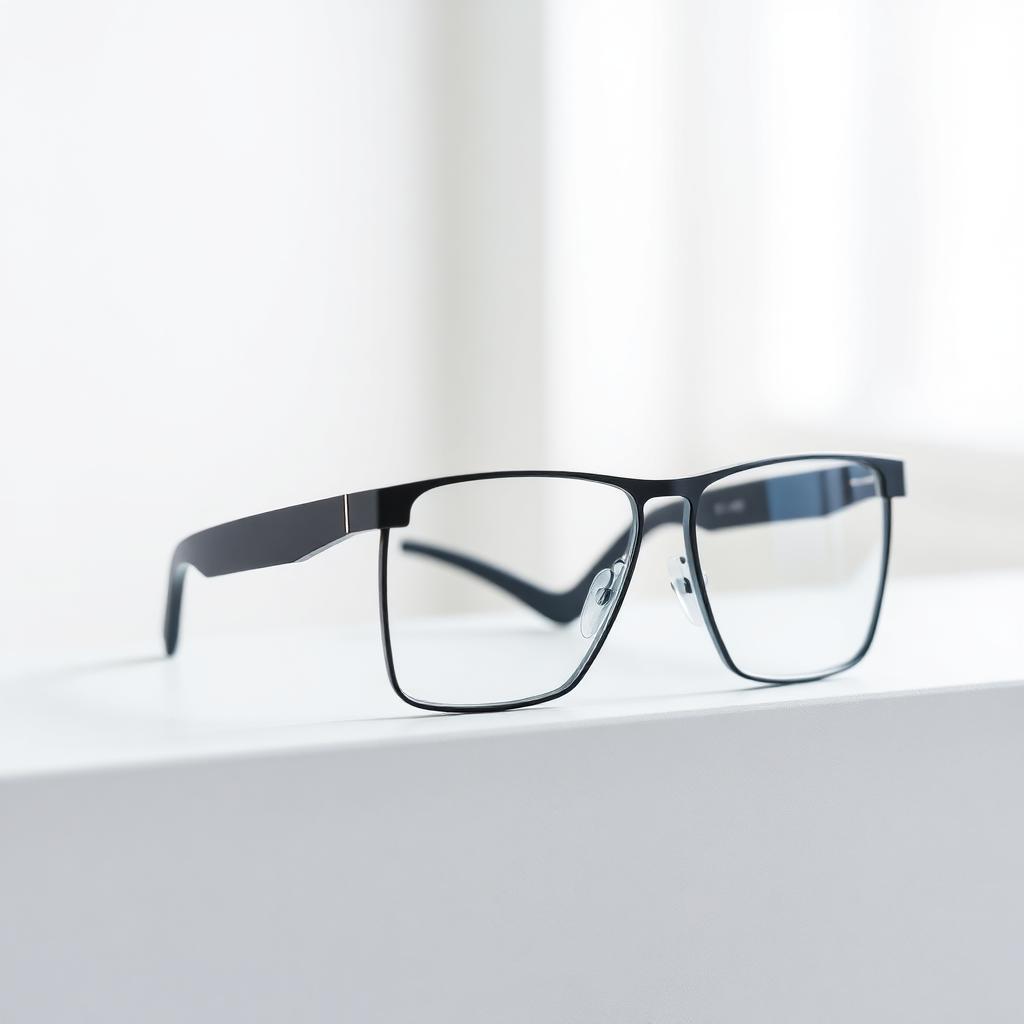
Earlier SpatialXRJournal file image; not from Samsung's November 12 media gallery.
Key takeaways
- Samsung announced prices, specs and a December 10, 2026 release for its Intelligent Eyewear on November 12; preorders are open.
- Warby Parker models start at $395 in the US; Gentle Monster models cost $449 to $489.
- The glasses have a 12MP HDR camera, Snapdragon AR1 Gen 1, open-ear audio and no in-lens display.
- Samsung claims up to nine hours of battery life, or 72 hours with the charging case.
- A compatible Galaxy, Pixel or iPhone is required for the full Gemini experience.
On this page
Samsung and Google move intelligent eyewear toward commercial release
The smart-glasses market is preparing for another major product launch. On November 12, 2026, Samsung officially announced the complete lineup, technical specifications and pricing for its Intelligent Eyewear collections, developed with Google and eyewear brands Warby Parker and Gentle Monster.
The glasses will become available on December 10, with preorders opening immediately after the announcement. The collection includes 30 design variations across two brands.
Warby Parker models start at $395 in the United States, while Gentle Monster models range from $449 to $489. The products combine conventional eyewear with camera-based artificial intelligence, voice interaction and smartphone connectivity.
Unlike immersive mixed-reality headsets, these glasses do not incorporate an in-lens visual display. Instead, they use cameras, microphones and open-ear speakers to provide contextual information and assistance through Google's Gemini AI.
The November announcement adds the previously missing commercial details, including final prices, hardware specifications, battery performance and supported smartphones.
Two eyewear brands, one computing platform
Samsung's Intelligent Eyewear collection is being introduced through two established eyewear brands. Warby Parker contributes three frame designs, available in 14 variations.
Gentle Monster contributes six frame designs, available in 16 variations. The collections share a common technology platform while offering different visual identities.
This approach allows Samsung and Google to distribute their wearable computing technology through eyewear brands rather than relying exclusively on traditional electronics channels. The hardware is designed to resemble conventional glasses.
Samsung lists a typical weight of approximately 41 grams, although individual models vary. The manufacturer reports weights ranging from 39.6 to 43.9 grams for Gentle Monster and 40.4 to 42.6 grams for Warby Parker, excluding prescription lenses.
The lightweight construction is intended to support extended everyday use. However, comfort will depend on fit, lens configuration and individual preferences.
A 12MP camera provides visual context for Gemini
The glasses include a 12-megapixel HDR camera. It supports photographs at 3,024 × 4,032 pixels and video recording at up to 3K resolution and 30 frames per second.
HDR video is supported at up to 2K resolution. The camera serves two functions.
First, users can capture photographs and video without holding a smartphone. Second, the camera can provide visual information to Gemini.
For example, a user can ask the assistant to identify an unfamiliar landmark or explain an object in view. Gemini can then respond through the glasses' speakers.
This creates an interaction model in which visual context and natural-language conversation operate together. However, the availability of particular AI capabilities depends on the connected smartphone, supported services, permissions and regional availability.
Gemini becomes a hands-free assistant
Samsung and Google are positioning Gemini as the principal interaction layer. Users can ask questions, request translations, manage information and communicate without continuously interacting with a phone screen.
Samsung describes several examples. A user can capture a whiteboard during a meeting, request a summary and save the information to Samsung Notes.
Another can ask for directions through Google Maps. The glasses can also help manage notifications, read messages aloud and support voice responses.
Gemini's visual capabilities allow conversations about objects and environments captured by the camera. The glasses also support Bixby when paired with compatible Galaxy smartphones.
These functions illustrate the distinction between conventional smart glasses and AI-focused eyewear. The device is not simply a camera with speakers.
It also provides a conversational interface for accessing information and performing supported tasks.
Nine hours of battery life and a charging case
Battery performance is a central consideration for wearable electronics. Samsung advertises up to nine hours of battery life on a single charge.
With the charging case, the manufacturer claims up to 72 hours of total use. These figures are based on Samsung's mixed-use testing conditions.
Actual battery life will depend on activities such as camera recording, AI conversations, audio playback and connectivity. The glasses use Qualcomm's Snapdragon AR1 Gen 1 platform.
They include 2GB of RAM and 64GB of internal storage. Connectivity options include Wi-Fi 6E and Bluetooth 5.4.
Samsung also uses a split-computing architecture that transfers some processing responsibilities to a connected smartphone. This reduces the amount of computing hardware that must be integrated into the frames.
However, it means the glasses are not a completely independent computing platform. A compatible smartphone is required to access the full Gemini experience.
Privacy controls and recording indicators
Camera-equipped smart glasses introduce privacy considerations for both wearers and people nearby. Samsung has included an external LED that indicates when the camera is capturing images or recording video.
The wearer also receives an internal light notification and an audible signal. The manufacturer says the camera is designed to stop capturing if the external recording indicator is covered or fails to operate.
Google and Samsung also describe software protections for visual AI interactions. According to Samsung, visuals collected by Gemini are not used for AI training or advertising targeting.
The system is designed to redact bystanders' faces when users ask Gemini questions about their surroundings. These are manufacturer-described privacy measures, not evidence of an independent privacy audit.
The glasses are intended for users aged 18 and older, with age verification required for activation and application downloads.
Accessibility and contextual assistance
The glasses also introduce possibilities for audio-based contextual assistance. Voice interaction can reduce dependence on conventional touchscreens for some tasks.
Spoken navigation and visual descriptions may provide useful information when a user cannot easily consult a smartphone. Google has also described accessibility capabilities such as Guided Vision and support involving Aira.
However, the availability and performance of these services depend on compatible software and supported markets. AI-generated descriptions should not be assumed to be consistently accurate.
For navigation and accessibility-related use cases, users may still need alternative sources of information and appropriate safeguards. The product's real-world accessibility will depend on interaction reliability, audio clarity, controls and compatibility with assistive services.
Technical specifications
- Processor: Snapdragon AR1 Gen 1
- Camera: 12MP HDR
- Photo resolution: 3,024 × 4,032
- Video: Up to 3K at 30fps
- RAM: 2GB
- Storage: 64GB
- Audio: Two open-ear speakers
- Microphones: Four
- Battery life: Up to 9 hours
- With charging case: Up to 72 hours
- Typical weight: Approximately 41g
- Connectivity: Wi-Fi 6E, Bluetooth 5.4
- Water resistance: IPX4
- Controls: Touch and voice
- AI: Gemini; Bixby on compatible Galaxy phones
- In-lens display: None
- Smartphone pairing: Required for full AI functionality
Specifications are taken from Samsung's official November 12 announcement.
Smartphone compatibility
Samsung has confirmed compatibility with selected devices from three smartphone ecosystems. Supported Samsung devices include compatible Galaxy S, S FE, Z Fold, Z Flip and Z Fold Ultra models running One UI 9.0 or later.
Google Pixel support begins with the Pixel 7 series, subject to Android 17 software requirements. Compatible iPhones include iPhone 13 and later models meeting the minimum memory and iOS requirements.
This cross-platform compatibility broadens the potential customer base. However, not all capabilities are necessarily identical across operating systems.
Certain Samsung-specific integrations, including Bixby, require compatible Galaxy devices. The company also states that activation requires accounts associated with officially supported sales markets.
Purchasing the glasses through an unofficial import does not guarantee that they can be activated in another country.
Pricing and availability
- Warby Parker Intelligent Eyewear: US price From $395; Initial market United States
- Gentle Monster Intelligent Eyewear: US price $449–$489; Initial market United States and South Korea
Preorders opened on November 12. General availability is scheduled for December 10, 2026.
Samsung has not confirmed a wider international release schedule. The initial launch is limited to selected markets, and additional regions may receive different availability, software capabilities or commercial conditions.
Intelligent eyewear becomes a consumer product category
The November 12 announcement marks a transition from demonstrations and product previews to a defined commercial offering. Samsung and Google have established prices, specifications, distribution partners and a launch date.
The products are designed around everyday eyewear rather than immersive displays. Their primary capabilities involve visual AI, voice interaction, photography, audio and smartphone-connected services.
This makes them different from XR glasses intended to display three-dimensional content or replace computer monitors. The collaboration also demonstrates how computing hardware is being integrated into established eyewear distribution models.
Samsung Intelligent Eyewear represents another step toward smart glasses becoming a mainstream wearable computing category, with AI assistance rather than immersive visuals at the center of the experience.
Sources
- Samsung — Official product announcement, November 12, 2026. Samsung Intelligent Eyewear: Specifications, Pricing and Availability. samsungmobilepress.com/articles/samsung-intelli…
- Samsung Global Newsroom — November 12, 2026. Samsung Announces December Release for Intelligent Eyewear. news.samsung.com/global/samsung-announces…
- WIRED — November 12, 2026. Google and Samsung's Android XR Smart Glasses Are Finally Here. wired.com/story/google-samsung-int…
Coverage of industry news across spatial computing and immersive technologies. Product details come from manufacturers' public documentation, sources are linked at the end of each article, and a person reviews every article before publication.
Related reading
VeriSilicon Introduces Nano-XR Technology to Reduce Power Consumption in AI and AR Glasses
VeriSilicon has announced a wearable computing subsystem designed specifically for AI and augmented reality glasses. Its Nano-XR technology combines specialized processing components with an optimized architecture intended to reduce energy consumption, memory requirements and processing latency.

GTA 6 and Virtual Reality: What XR Headsets Can Actually Deliver Today
Following the release of Grand Theft Auto VI, questions have emerged about compatibility with virtual reality headsets. Current options involve displaying the console game on a virtual screen rather than entering its world through a native immersive VR experience.

ArcGIS XR Viewer Adds Gaussian Splatting, AI Voice Controls and Collaborative 3D Tools
Esri updates ArcGIS XR Viewer with Gaussian Splatting, AI voice commands, BIM exploration and collaborative 3D sketching for immersive geospatial workflows.