RayNeo GT Max and iO debut at IFA 2026: two different paths for the future of AR glasses
RayNeo has brought two very different approaches to wearable spatial computing to IFA 2026. The GT Max focuses on cinematic AR with a 59° field of view and Dolby Vision, while the 33-gram iO explores lightweight, camera-free AI assistance for everyday use.
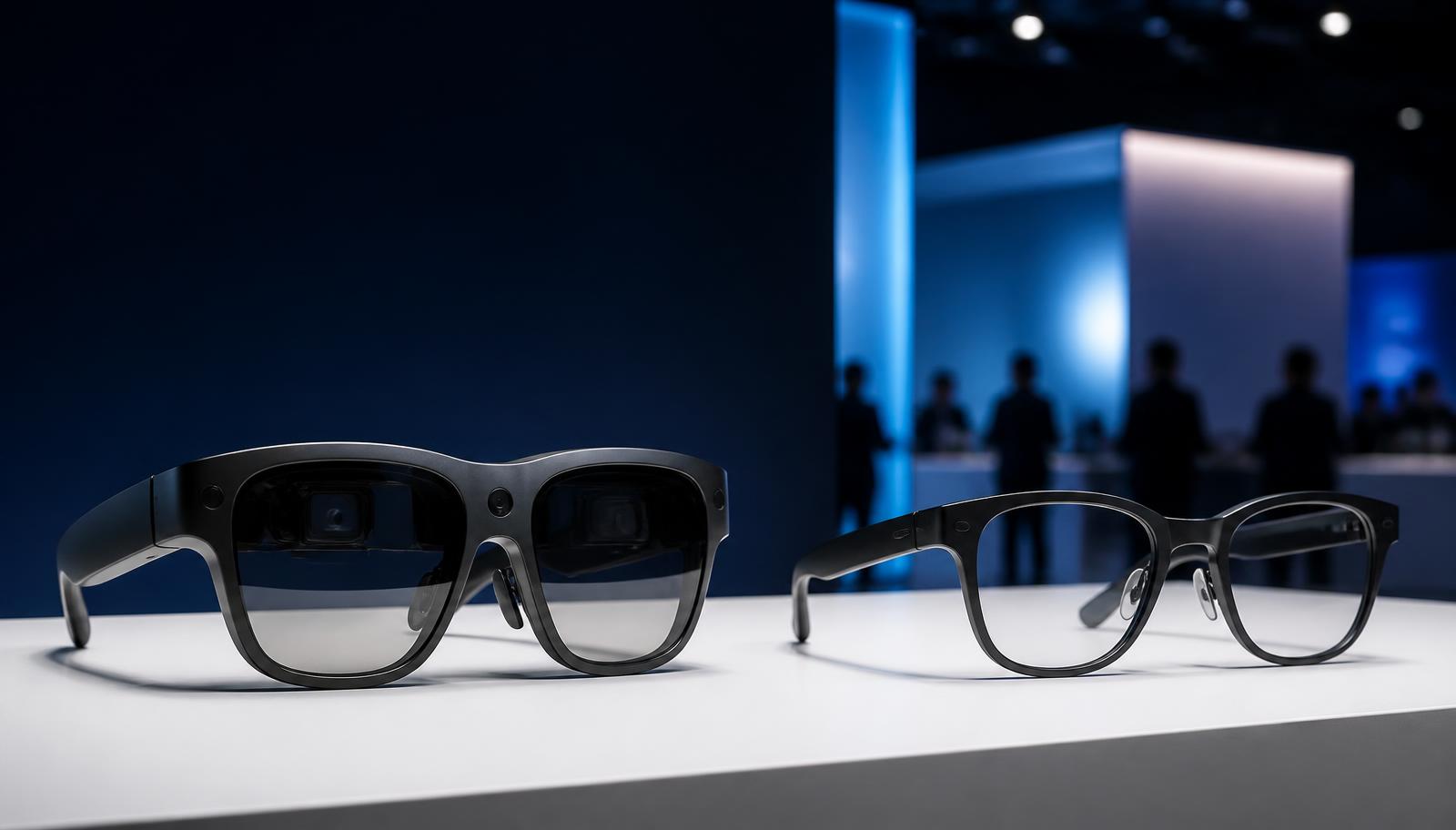
RayNeo brings its new AR glasses to IFA 2026
The smart glasses market is starting to fragment into increasingly specialized device categories.
At IFA 2026 in Berlin, RayNeo is demonstrating two products that illustrate this shift particularly clearly: RayNeo GT Max and RayNeo iO.
Both are glasses-based computing devices, but they pursue very different experiences.
GT Max is designed around entertainment and a large virtual display. iO takes the opposite approach: a lightweight heads-up display intended to provide contextual information and AI assistance throughout the day.
RayNeo held its launch event on September 3, with demonstrations running at IFA from September 4 to 8, 2026.
GT Max turns AR glasses into a portable display
The RayNeo GT Max is the more immersive of the two devices.
It uses the company's Peacock Optical Engine 3.0 Max and offers a 59-degree field of view, with a virtual display that RayNeo describes as equivalent to a large cinema-sized screen.
The glasses weigh approximately 78 grams, use Micro-OLED display technology and include a dual-chip architecture that separates display processing from 3DoF spatial tracking.
This allows the virtual screen to react to head movement and operate in different viewing modes rather than behaving only as a display permanently attached to the user's gaze.
RayNeo is positioning GT Max primarily for movies, gaming, travel and portable productivity.
The first AR glasses with Dolby Vision support
One of the headline specifications is Dolby Vision.
RayNeo says the GT Series is the first AR glasses lineup designed to support Dolby Vision playback. Audio is provided through a four-speaker system co-tuned with Bang & Olufsen.
There is an important technical qualification. Dolby Vision playback requires compatible content and RayNeo's Pocket TV Pro accessory; it should therefore not be interpreted as universal Dolby Vision support when the glasses are connected to any USB-C device.
The broader development remains significant: display glasses are increasingly competing on characteristics traditionally associated with televisions and monitors—HDR, image quality, spatial audio and display size—rather than simply on whether they can project a virtual screen.
RayNeo iO takes the opposite approach
Alongside GT Max, RayNeo is showing a substantially different product.
The RayNeo iO weighs approximately 33 grams and is designed to resemble conventional eyewear more closely.
Instead of a large cinematic display, it uses a compact monochrome heads-up display with a 23.5-degree field of view.
Its purpose is not immersive entertainment. The glasses are designed to surface information such as calendar events, tasks, navigation and AI-generated assistance without requiring users to repeatedly check a smartphone.
Perhaps more interestingly, the iO does not include a camera. That separates it from the camera-first strategy being pursued by several other smart-glasses manufacturers and creates a different balance between AI assistance, privacy, battery requirements and everyday wearability.
One form factor, increasingly different products
The contrast between GT Max and iO illustrates an important change in the XR hardware market.
""Smart glasses" is becoming too broad a term to describe a single product category."
GT Max behaves primarily as a wearable spatial display. iO behaves more like an AI heads-up interface. Other devices combine cameras, microphones and AI without displays, while more advanced optical see-through systems are moving toward full spatial computing with 6DoF tracking and environmental understanding.
The physical form may look similar, but the underlying interaction models are increasingly different.
Price is becoming another competitive variable
RayNeo has also positioned the devices aggressively on price.
The GT Max has an MSRP of $429 / €489, while the standard GT starts at $329 / €369. RayNeo iO starts at $499 / €549, or $549 / €599 with its charging case bundle.
Sales began on September 4, with distribution planned across 40 countries and regions, including the United States, European Union, United Kingdom, Canada, Mexico, Japan and Australia.
GT Max's pricing is particularly notable because it places a 59-degree-FOV display device below several competing premium XR display glasses. Early hands-on coverage from IFA has consequently highlighted the combination of field of view, display quality and price as one of the product's strongest characteristics.
AR glasses are becoming a portfolio, not a single device
IFA 2026 is reinforcing a broader pattern already visible across the XR industry. Manufacturers are no longer attempting to solve every spatial-computing use case with the same hardware.
- AI glasses prioritize contextual assistance and everyday wearability.
- Display glasses prioritize portable screens, gaming and entertainment.
- Spatial computing glasses add environmental tracking, hand interaction and persistent spatial interfaces.
- VR/MR headsets continue to provide the highest levels of immersion and spatial tracking.
RayNeo's decision to introduce iO and GT Max simultaneously makes this segmentation particularly visible.
The next stage of the AR-glasses market may therefore be less about finding one device capable of replacing every other screen and more about determining which combination of display, AI, sensors, weight and processing is appropriate for each context.
IFA 2026 is showing that those combinations are beginning to reach the consumer market.
Sources
- IFA Berlin — RayNeo New Smart Glasses Launch Event: official IFA event listing with specifications for RayNeo iO and GT Max and details of the September 3 presentation
- RayNeo — IFA 2026 announcement: product specifications, pricing, international availability and information about the Dolby and Bang & Olufsen collaborations
- TechRadar — RayNeo GT Max hands-on at IFA 2026: independent first impressions of the display, field of view, audio and positioning against competing XR glasses
Editorial coverage of industry news and developments across spatial computing and immersive technologies.
Related reading

Google AgentHands gives AI agents spatial hand gestures in XR
Google Research has introduced AgentHands, an LLM-powered XR prototype that gives AI assistants synchronized virtual hands able to point, demonstrate actions and interact with objects in physical space.
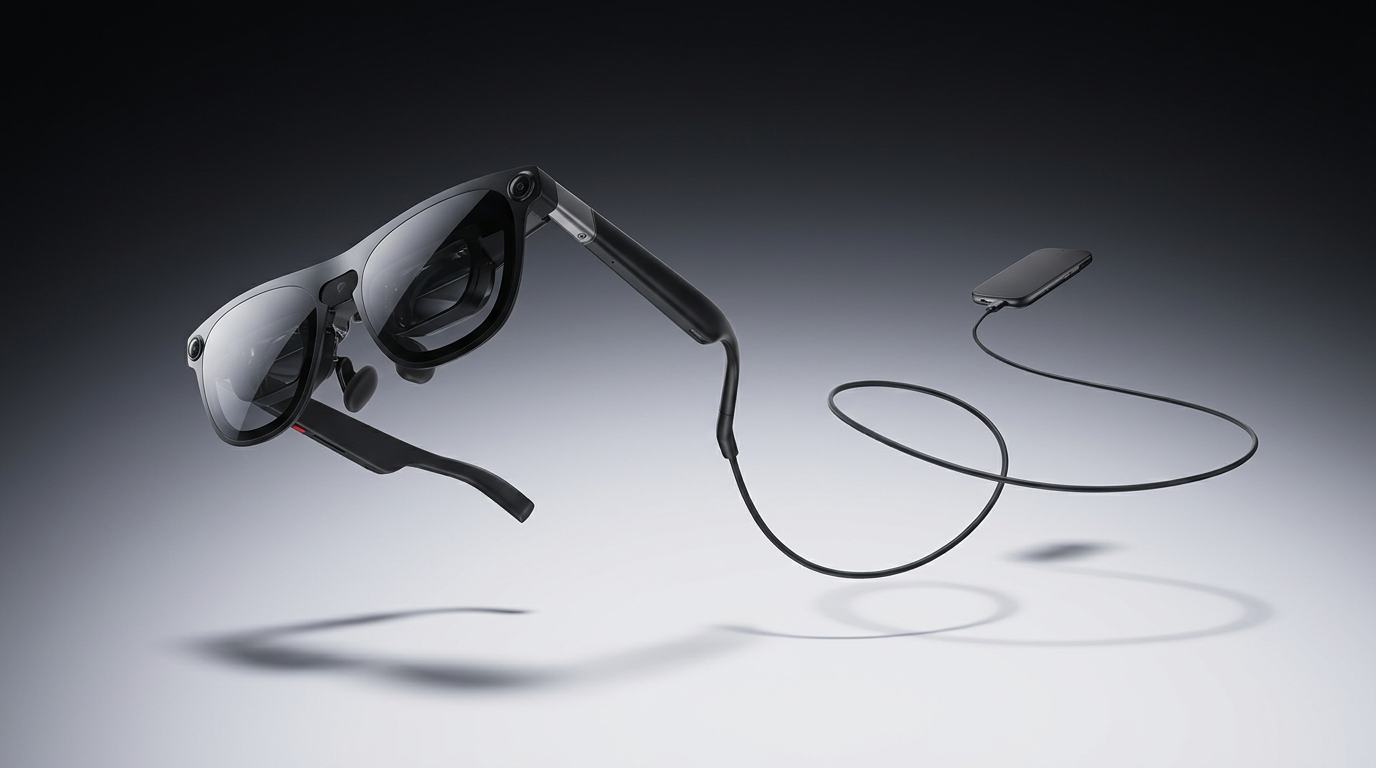
XREAL AURA passes 10,000 reservations before launch: Android XR gains traction in spatial computing
XREAL AURA has passed 10,000 global reservations before reaching the market. The spatial computing glasses pair Android XR, Google Gemini, a 70° field of view and a separate compute puck, signalling early demand for lighter XR devices.
Valve moves Steam Frame closer to launch: SteamOS now ships support for its wireless adapter
Valve added preliminary support for the Steam Frame Wireless Adapter in SteamOS 3.8.25 Beta. Together with the headset's recent FCC authorization and a growing "Great on Frame" catalog, the signals point to a launch drawing closer.