Valve moves Steam Frame closer to launch: SteamOS now ships support for its wireless adapter
Valve added preliminary support for the Steam Frame Wireless Adapter in SteamOS 3.8.25 Beta. Together with the headset's recent FCC authorization and a growing "Great on Frame" catalog, the signals point to a launch drawing closer.
Key takeaways
- SteamOS 3.8.25 Beta added preliminary support for the Steam Frame Wireless Adapter.
- The change indicates Valve is moving Steam Frame closer to commercial launch.
- Wireless PC VR streaming is central to how Steam Frame bridges standalone and PC libraries.
Steam Frame takes another step toward market
Valve continues preparing its ecosystem for Steam Frame, its upcoming standalone VR headset. The SteamOS 3.8.25 Beta update, first published on August 7, includes one line that matters a great deal for the XR ecosystem: preliminary support for the Steam Frame Wireless Adapter. The change gained attention over the following days as specialist outlets weighed its implications for the device's launch.
The update does not confirm a release date, but it shows Valve is now integrating Steam Frame-specific components directly into SteamOS — one more signal in a sequence of technical and regulatory milestones that has accelerated in recent weeks.
What is the Steam Frame Wireless Adapter?
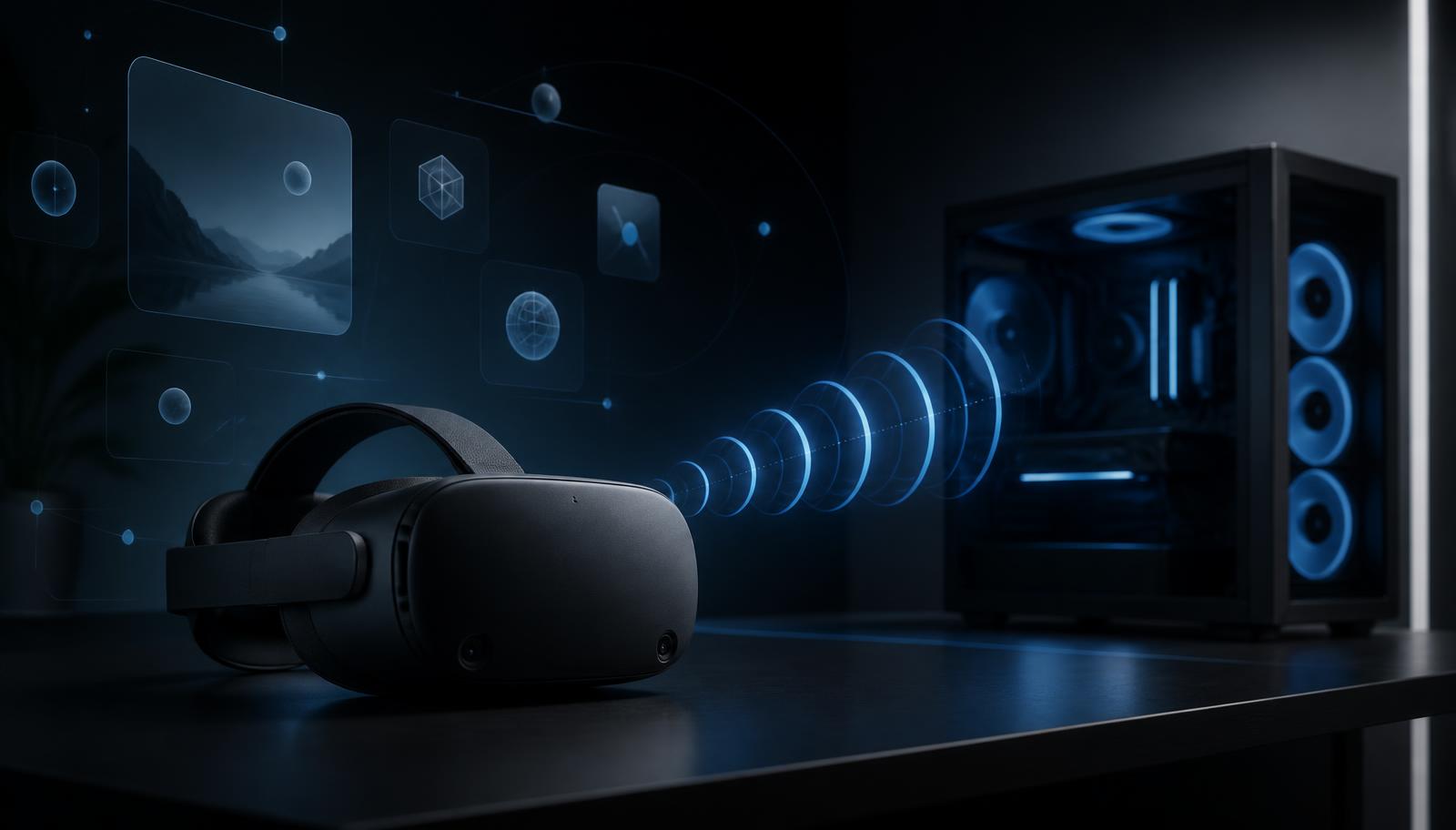
One of the most interesting aspects of Steam Frame is its hybrid approach. The device is designed to run as an independent SteamOS-based headset, but it will also use a dedicated 6 GHz wireless adapter to stream content from a PC.
- Run experiences natively on the headset itself
- Use a PC's graphics power for PC VR titles over a dedicated wireless link
The goal is to cut cable dependency while keeping a dedicated connection between computer and headset. Folding the adapter into SteamOS is therefore an important piece of the full product architecture.
SteamOS starts preparing specifically for Steam Frame
Version 3.8.25 Beta is not a final release. Valve explicitly describes the feature as "preliminary support", so it should not be read as confirmation that launch is imminent. Even so, its appearance inside the operating system is significant: Valve is building a platform where SteamOS manages not only Steam Deck and other gaming handhelds, but XR hardware too.
The headset stops being merely a SteamVR peripheral and becomes part of Steam's own hardware and software ecosystem.
The launch signals keep stacking up
Adapter support does not arrive in isolation. Steam Frame recently cleared another hurdle: the FCC granted authorization on July 29, removing one of the regulatory requirements needed to sell wireless hardware in the United States.
The catalog flagged as "Great on Frame" is also expanding. According to tracking by VR.org, certified titles grew from eight on July 17 to 65 games by August 10. Hardware, operating system, connectivity and catalog are converging around the same product.
A standalone headset with PC VR DNA
Steam Frame could occupy a distinct position in today's market. Meta Quest proved standalone headsets can reach a sizeable audience, while PC VR still delivers experiences that demand far more graphics capability. Valve appears to be connecting both models.
The headset will run content natively through SteamOS, while its dedicated wireless connection lets it borrow a PC when an application needs more processing power. That strategy turns the device into an extension of the Steam ecosystem rather than a wholly separate XR platform.
SteamOS changes the equation too
There is another important element: Steam Frame is not arriving alone. Valve is expanding SteamOS beyond Steam Deck and its own hardware, and the same 3.8.25 update adds support for additional devices while continuing to develop the OS as an independent gaming platform.
That could matter for XR. While Meta develops Horizon OS, Apple runs visionOS and Google pushes Android XR, Valve can build its proposition around an advantage it already owns: an enormous game library and an established distribution infrastructure. Steam Frame could become the XR expression of SteamOS.
The date remains the big unknown
Valve has placed Steam Frame in a summer 2026 launch window, but as of August 17 it has not publicly announced a specific availability date or final price. It is worth separating technical signals from a commercial confirmation.
"Steam Frame is no longer just announced hardware: its infrastructure is starting to appear inside the software that will have to run it."
The SteamOS update, the regulatory clearance and the growth of "Great on Frame" all indicate the ecosystem is moving forward — but none of them replaces an official announcement.
Sources
- Valve / SteamOS — SteamOS 3.8.25 Beta, August 7, 2026 update adding preliminary Steam Frame Wireless Adapter support
- PC Gamer — August 12 coverage of the adapter support and pre-launch signals
- VR.org — Updated Steam Frame tracking: FCC authorization, launch window and the Great on Frame catalog
Editorial coverage of industry news and developments across spatial computing and immersive technologies. Every story is reviewed by a second editor, and hardware claims are checked against manufacturer documentation before publication.
Related reading
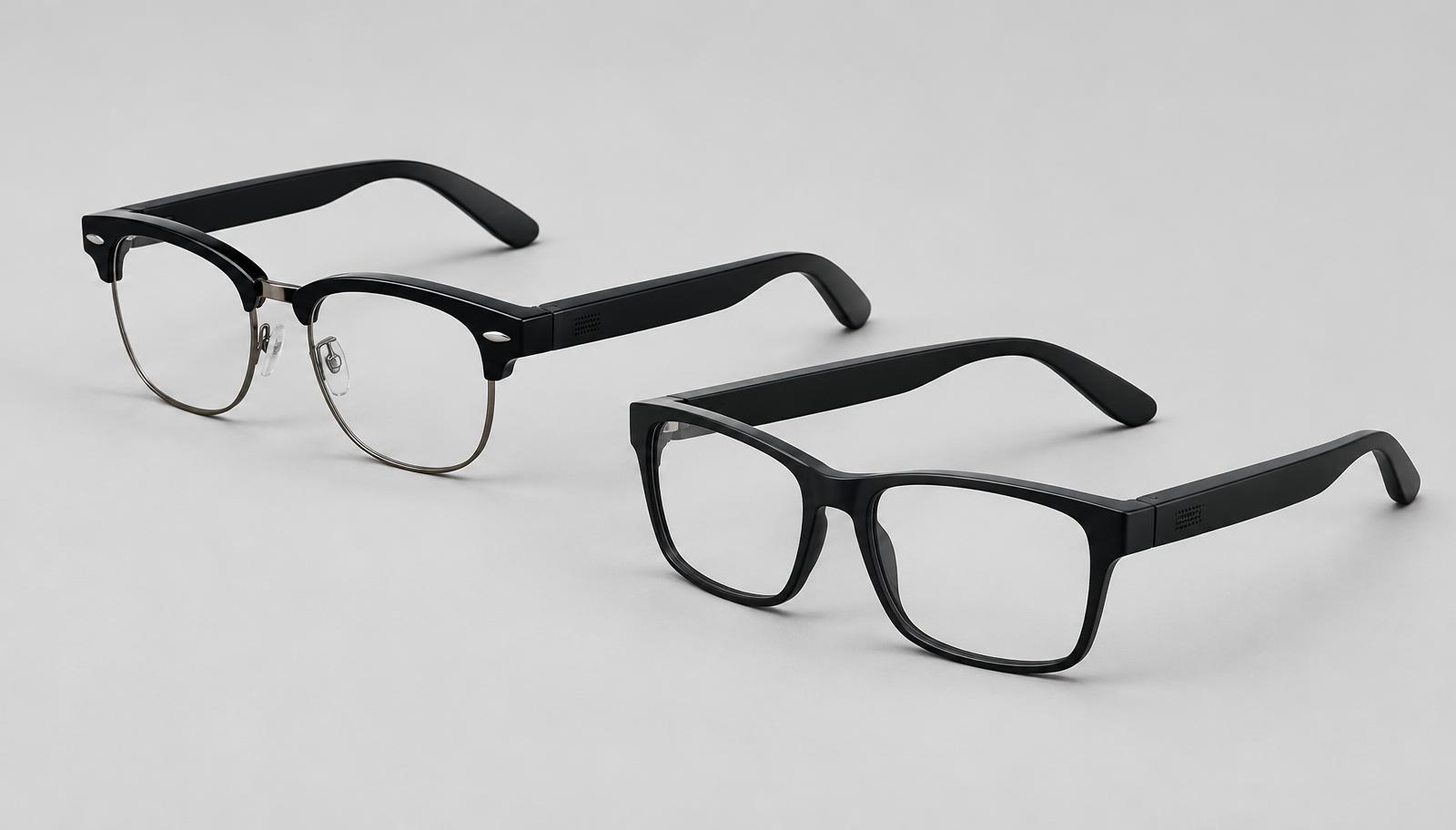
Meta is introducing a different kind of smart glasses
Ray-Ban Meta Audio begins shipping at $349: camera-free, display-free smart glasses built around open-ear audio, voice interaction and Meta's AI assistant.

TRANCITY Nebula introduces 3D spatial change detection and new digital twin analytics tools
CalTa announces new spatial analytics capabilities for TRANCITY Nebula, including voxel-based change detection, 3D visualization, digital twins and environmental data overlays.

Google and Unity introduce Unity Spark, bringing AI-powered creation closer to interactive 3D development
Google and Unity announce Playground and Unity Spark, combining generative AI, natural language creation and Unity's real-time 3D engine to simplify interactive development.