Samsung’s Android XR glasses move closer to launch as the smart-glasses market gets another major platform
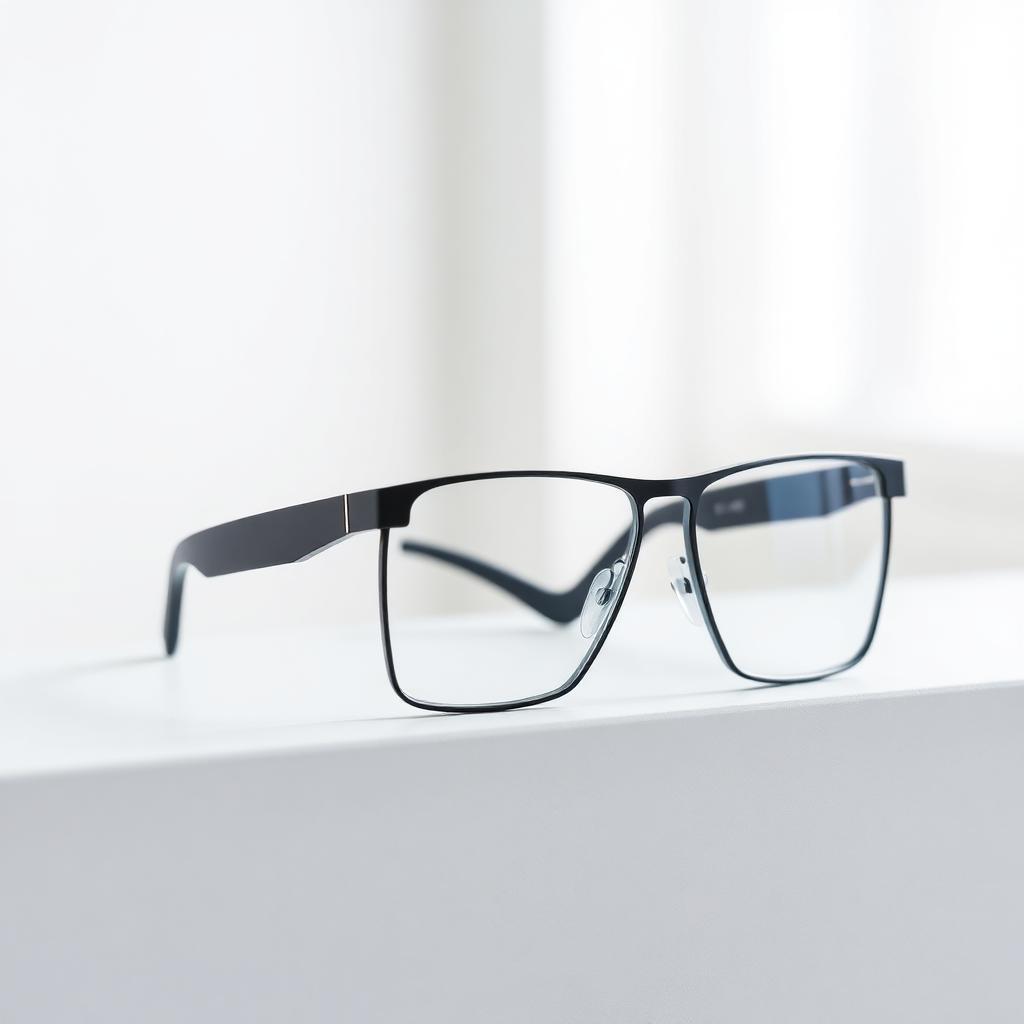
Samsung's first Android XR AI glasses have cleared FCC certification in the US, while new reporting points to a November launch. Built with Google, Gentle Monster and Warby Parker, the displayless glasses use Gemini and a connected smartphone to keep the eyewear lighter while moving heavier computing away from the face.
Key takeaways
- Samsung's Intelligent Eyewear received FCC certification on September 27 across eleven model numbers and two product families.
- A reported November 2026 launch remains unofficial; Samsung has not announced a specific date or price.
- The first model has no lens display, using cameras, microphones, speakers and Gemini for primarily audio interactions.
- Split computing moves demanding workloads to a connected phone, supported by Bluetooth and tri-band Wi-Fi 6E.
- Gentle Monster and Warby Parker partnerships position design, fit and social acceptance alongside technical capability.
Samsung’s AI glasses are getting closer to becoming a real product
The smart-glasses market is about to gain another major platform.
Samsung's upcoming Intelligent Eyewear has cleared FCC certification in the United States, with filings covering eleven model numbers across two product families. The certifications were issued on September 27.
A Samsung official subsequently told The Korea Herald that the glasses are expected to launch in November 2026, although Samsung has not yet published an official launch date or price. The November timing should therefore still be treated as reported rather than formally announced.
The device is important for another reason: it will be one of the first consumer smart-glasses products built around Android XR, Google's spatial-computing platform.
These are AI glasses, not miniature AR displays
Samsung's first model does not attempt to put a visual interface directly in front of the user's eyes. There is no display in the lenses.
Instead, the glasses combine cameras, microphones and speakers with Google's Gemini AI. The camera provides visual context, the microphones capture voice interaction, Gemini processes requests and contextual information, and responses return primarily through audio.
Samsung previously demonstrated use cases including navigation, real-time translation, messaging, contextual recommendations and capturing information from documents, meetings and the environment. This puts Samsung's first product much closer to the current Ray-Ban Meta model than to devices such as XREAL One Pro or full mixed-reality headsets. The computer interface becomes largely invisible.
The phone does part of the computing
One of the more interesting architectural decisions is Samsung's use of what the company describes as split computing. Instead of forcing all processing to happen inside the glasses, more demanding workloads can be handled by a connected smartphone.
Samsung's XR leadership has explained that this architecture helps keep the glasses lightweight while maintaining access to more substantial computing resources. The newly published FCC information adds an important technical detail: the glasses support Bluetooth and Wi-Fi 6E across the 2.4 GHz, 5 GHz and 6 GHz bands.
The certification also allows direct client-to-client communication in the 6 GHz band. That could provide a high-bandwidth, low-latency connection between the glasses and another computing device without requiring all processing to remain inside the frames.
For wearable computing, this creates an interesting trade-off. The glasses can remain smaller and lighter while the smartphone provides battery capacity, connectivity and processing power that would otherwise need to fit on the user's face.
Samsung is treating eyewear as eyewear
Technology is only part of Samsung's strategy. The company is working with two established eyewear brands: Gentle Monster and Warby Parker.
Samsung publicly showed designs from both collaborations earlier this year. The frames are deliberately closer to conventional eyewear than to traditional XR hardware. Smart glasses are entering a product category where industrial design is inseparable from fashion.
A smartphone can look like a computer. A VR headset can look like technology. Glasses sit directly on a person's face for hours. Weight, frame shape, prescription support and social acceptability therefore become as important as processor specifications. The FCC filings covering multiple variants suggest Samsung is preparing more than a single universal frame.
Gemini becomes part of the operating model
Google's role extends beyond supplying Android XR. Gemini is intended to act as the primary intelligence layer behind the glasses. The camera allows the system to interpret what the wearer sees, while voice provides a low-friction input mechanism.
Instead of opening an app, navigating an interface, entering information and receiving a result, the interaction can become: look, ask, receive assistance.
Google has previously demonstrated Android XR glasses recognizing objects, providing directions, translating conversations and interacting with information from the physical environment. Samsung's glasses bring that model closer to a commercial ecosystem connected directly to Galaxy smartphones.
There is still an important software question
The hardware may be approaching launch faster than the application ecosystem. Google's current Android XR distribution documentation still focuses Play Store distribution primarily on immersive headsets and wired XR glasses. Public third-party distribution for this new class of displayless AI glasses remains less clearly defined.
Smart glasses become substantially more interesting as a computing platform when developers can build experiences around them rather than relying exclusively on manufacturer-supplied functionality. Meta is moving in precisely that direction with its Wearables Device Access Toolkit. Samsung and Google will eventually need to clarify how third-party developers participate in their own glasses ecosystem.
Smart glasses are becoming a platform competition
The emerging market is no longer defined by a single product. Meta has its own glasses ecosystem. Google and Samsung are building around Android XR. Snap is developing its next generation of Spectacles. XREAL is expanding Android XR into display-based glasses. Other manufacturers including Rokid and HTC are pursuing their own approaches.
The competitive question is no longer simply who can build the best pair of smart glasses. It is increasingly which ecosystem can connect glasses, smartphones, AI services, applications and developers most effectively.
Samsung enters that competition with an unusual advantage. It already controls one of the world's largest smartphone ecosystems. Google controls Android and Gemini. And the eyewear itself is being designed with companies that already understand how people choose and wear glasses.
The smartphone may not disappear from spatial computing
Smart glasses are often described as a potential successor to the smartphone. Samsung's architecture suggests a different possibility. The phone may remain part of the system, but gradually disappear from the user's immediate interaction.
It can stay in a pocket while providing connectivity, processing and access to existing applications. The glasses become the sensor and interaction layer. AI becomes the interface. The smartphone becomes the compute layer behind them.
That model could be an important intermediate stage in the evolution of spatial computing. Instead of replacing the smartphone immediately, smart glasses may first make us interact with it less.
"Latest development: FCC grants issued September 27, 2026; filings reported September 30–October 1. Reported launch: November 2026. Samsung has not yet announced a specific commercial date or price."
Sources
- FCC filings / VR.org — Samsung's November Glasses Cleared the FCC With Eleven Frame Models and a 6 GHz Radio.
- Android Central — Samsung Galaxy Glasses are coming sooner than you might think.
- Android Authority — Samsung and Google announcement coverage on Android XR, Gemini and the Warby Parker and Gentle Monster partnerships.
- Seoul Economic Daily — Samsung unveils first Galaxy AI glasses.
Editorial coverage of industry news and developments across spatial computing and immersive technologies. Every story is reviewed by a second editor, and hardware claims are checked against manufacturer documentation before publication.
Related reading
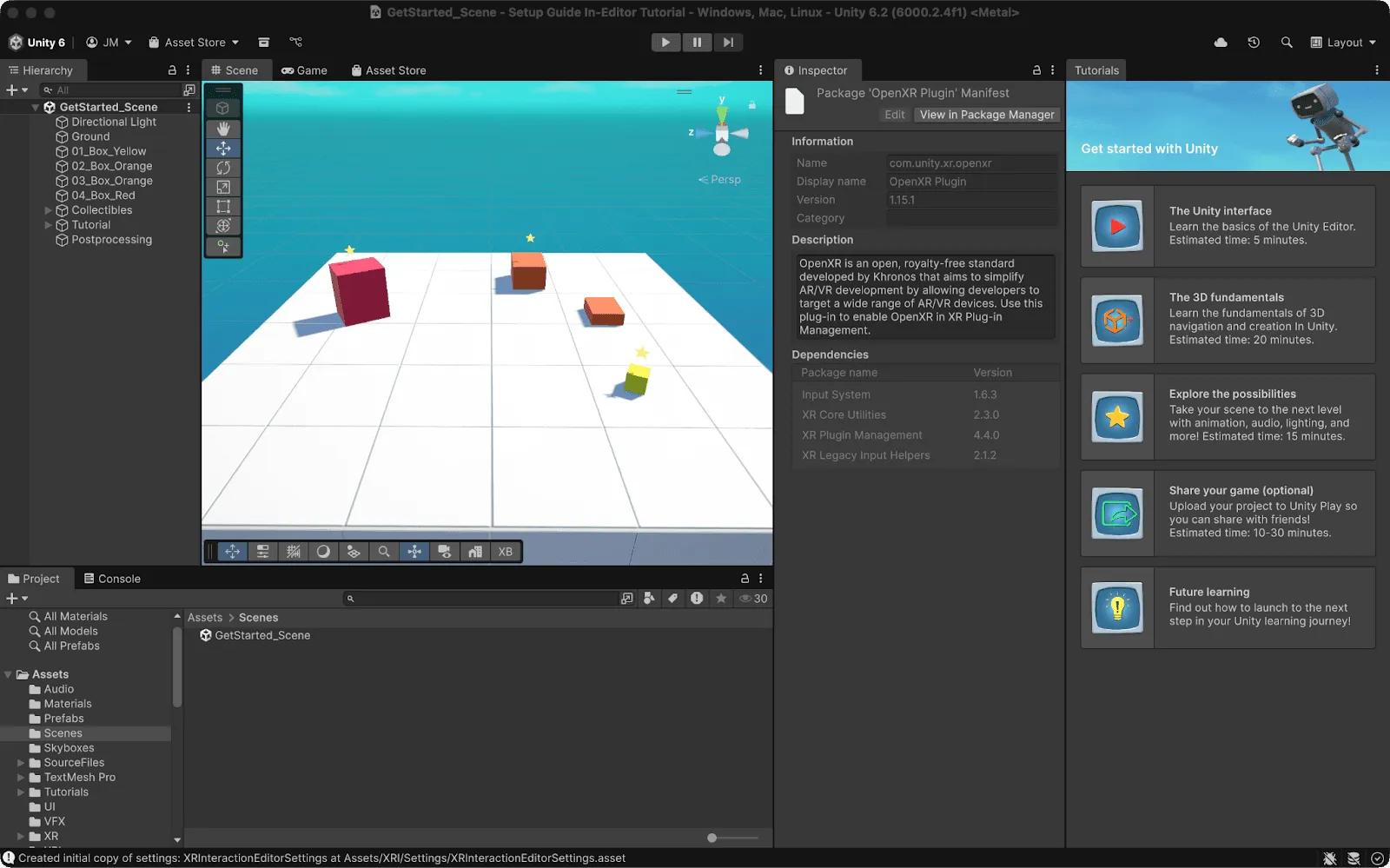
Unity 6.6 brings hand and eye tracking workflows to the next generation of VR
Unity has introduced day-one development support for Meta VR Glasses through Unity 6.6 and OpenXR. Beyond another device target, the update brings new workflows for hand and eye interaction, XR simulation, dynamic foveation and testing apps before the hardware is available.
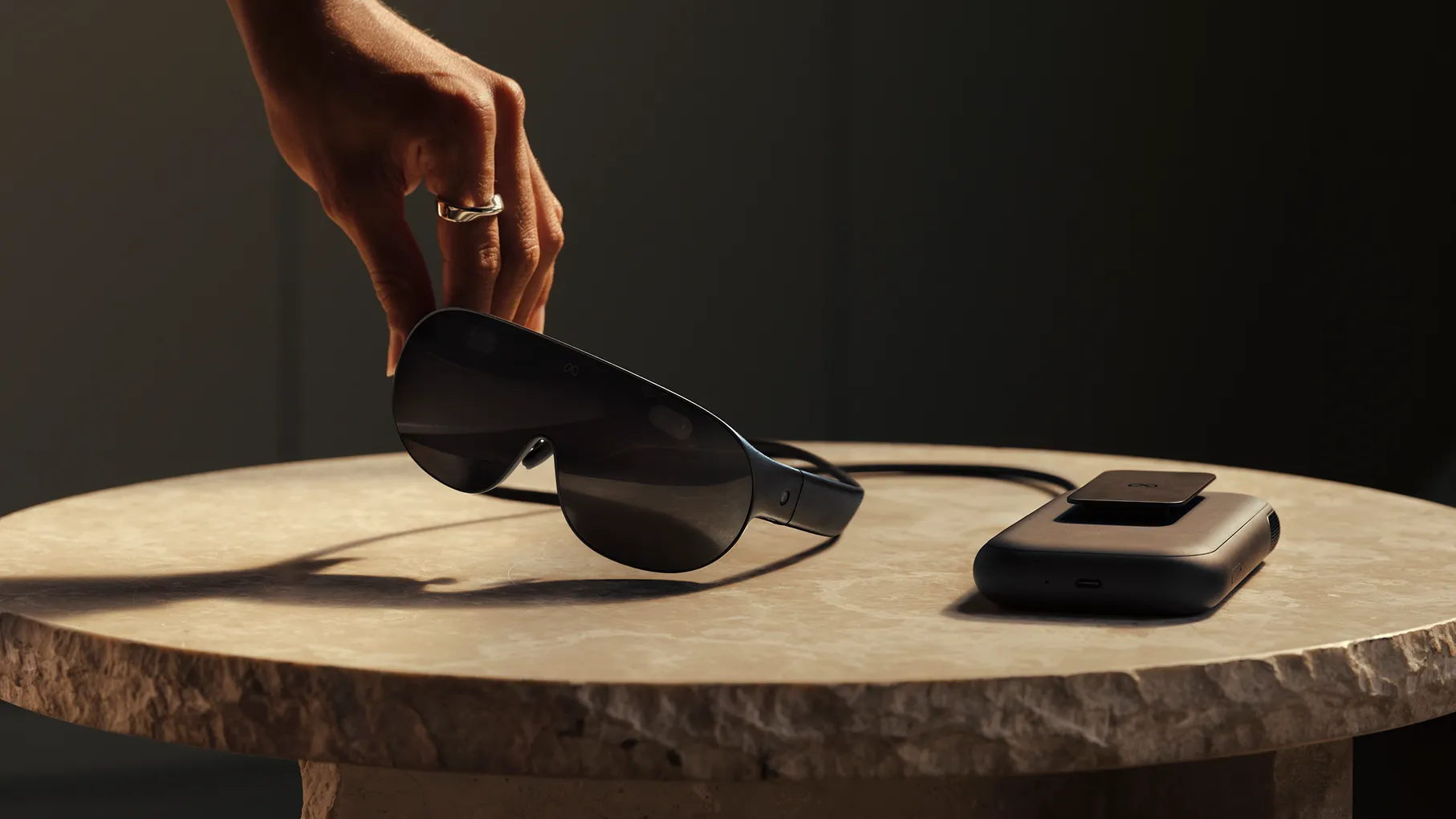
Meta VR Glasses: Meta shrinks VR to 100 grams and changes the form factor for 2027
Meta has officially unveiled Meta VR Glasses, a 100-gram VR device that moves processing and battery into an external puck. Launching in spring 2027 for $1,299.99, it combines eye and hand tracking, micro-OLED displays and the Meta Quest ecosystem in a radically lighter form factor.
Meta Connect 2026 puts AI glasses, VR and the next generation of XR development in focus
Meta Connect 2026 takes place September 23–24 with AI glasses, VR, Meta Horizon and AI technologies at the center of the event. Beyond potential hardware announcements, Meta is also preparing developers for new ways to build software across wearables and immersive environments.