Meta VR Glasses: Meta shrinks VR to 100 grams and changes the form factor for 2027
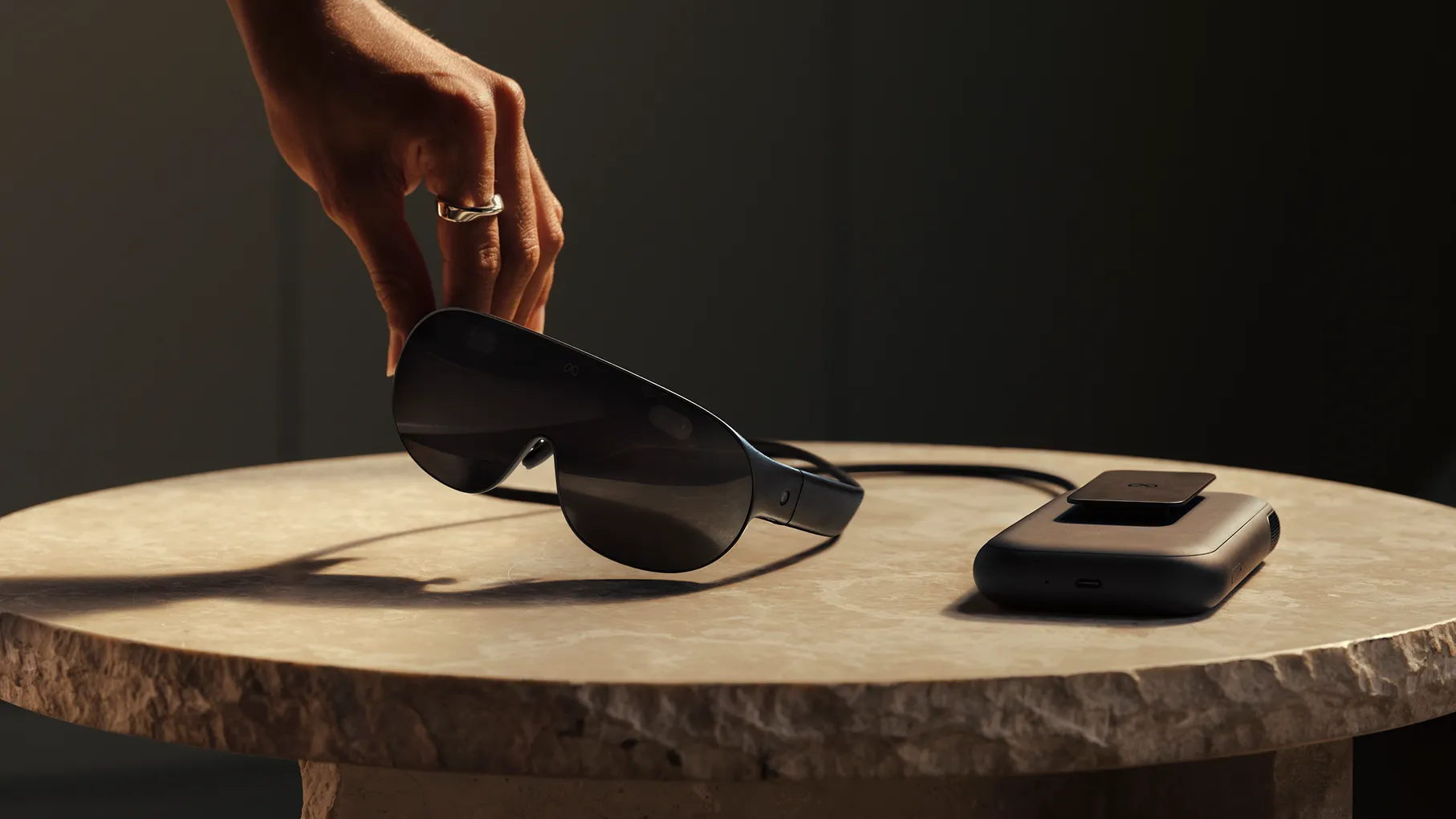
Meta has officially unveiled Meta VR Glasses, a 100-gram VR device that moves processing and battery into an external puck. Launching in spring 2027 for $1,299.99, it combines eye and hand tracking, micro-OLED displays and the Meta Quest ecosystem in a radically lighter form factor.
Key takeaways
- Meta VR Glasses weigh about 100 grams, roughly five times lighter than Quest 3, by moving compute, storage and battery into a tethered puck.
- 5K micro-OLED displays deliver 37 pixels per degree, powered by Snapdragon Reality Elite.
- Eye tracking and hand gestures are the primary input; 75+ games support gesture-only play at launch.
- The device runs the same OS, Store and SDKs as Meta Quest; v207 SDKs are available now.
- Launch is set for spring 2027 at $1,299.99 in the United States.
Meta's next VR device looks more like glasses than a headset
The most important XR announcement from Meta Connect 2026 was not a new Quest. Meta introduced Meta VR Glasses, a new VR device weighing approximately 100 grams and scheduled to launch in spring 2027 for $1,299.99.
The weight is the headline, but the architecture behind it is arguably more significant. Instead of placing the display, processing hardware, storage and battery together on the user's head, Meta has divided the system into two parts.
The glasses contain the displays and sensors. A separate puck connected through an optical tether contains the processing, battery and storage. It can be clipped to clothing or carried in a pocket or bag. That decision allows Meta to make the device approximately five times lighter than Quest 3.
A different answer to one of VR's oldest problems
For years, VR hardware has improved primarily by adding capability: higher-resolution displays, better passthrough, more cameras and sensors, faster processors and improved tracking. But every component placed on the head also affects weight, heat, balance and long-session comfort.
Meta VR Glasses take a different approach: remove some of that hardware from the face entirely. The result is closer to eyewear than the familiar ski-goggle architecture of modern VR headsets. There are no conventional head straps, and the open sides combined with passthrough allow users to maintain awareness of their surroundings.
Rather than asking how much technology can fit inside a headset, the question becomes how little hardware actually needs to remain on the user's face.
5K micro-OLED displays and 37 pixels per degree
The smaller form factor does not mean Meta is positioning the device as a simplified VR viewer. Meta VR Glasses use what the company calls a 5K Infinite Display, based on micro-OLED panels, delivering 37 pixels per degree. Meta says custom ultra-compact pancake lenses were developed specifically for the device.
The glasses also support Dolby Vision and integrate Dolby Atmos spatial audio directly into the frames. Processing comes from Qualcomm's Snapdragon Reality Elite platform. Meta claims up to three hours of continuous high-resolution media playback from the external puck, with support for 45W fast charging.
Eyes and hands replace the controller
Meta VR Glasses are designed around eye tracking and hand gestures as their primary input methods. Users can look at interfaces and use natural hand gestures to launch applications, control media, modify their workspace or interact with Meta AI without holding controllers.
Controllers have not disappeared completely. The device remains compatible with Touch Plus controllers and the wider Quest software catalog. But Meta says more than 75 games will support gesture-only interaction at launch.
Removing controllers from the default interaction model lowers another physical barrier between the user and the spatial interface. For applications designed around direct manipulation, gaze and hand interaction, it also changes what developers need to measure and understand about user behavior.
It is still part of the Quest ecosystem
Meta confirmed that VR Glasses run the same operating system, Store, payment infrastructure and SDKs as Meta Quest. Developers therefore do not need to rebuild their software around an entirely new ecosystem. Meta has already released its v207 SDKs, allowing developers to begin building and testing for the new device ahead of its spring 2027 launch.
New XR hardware frequently faces a cold-start problem: powerful hardware arrives before there is enough software designed for it. Meta is attempting to avoid that by treating VR Glasses as another form factor inside its existing VR platform rather than as a replacement ecosystem.
Meta also wants VR Glasses to become a computer
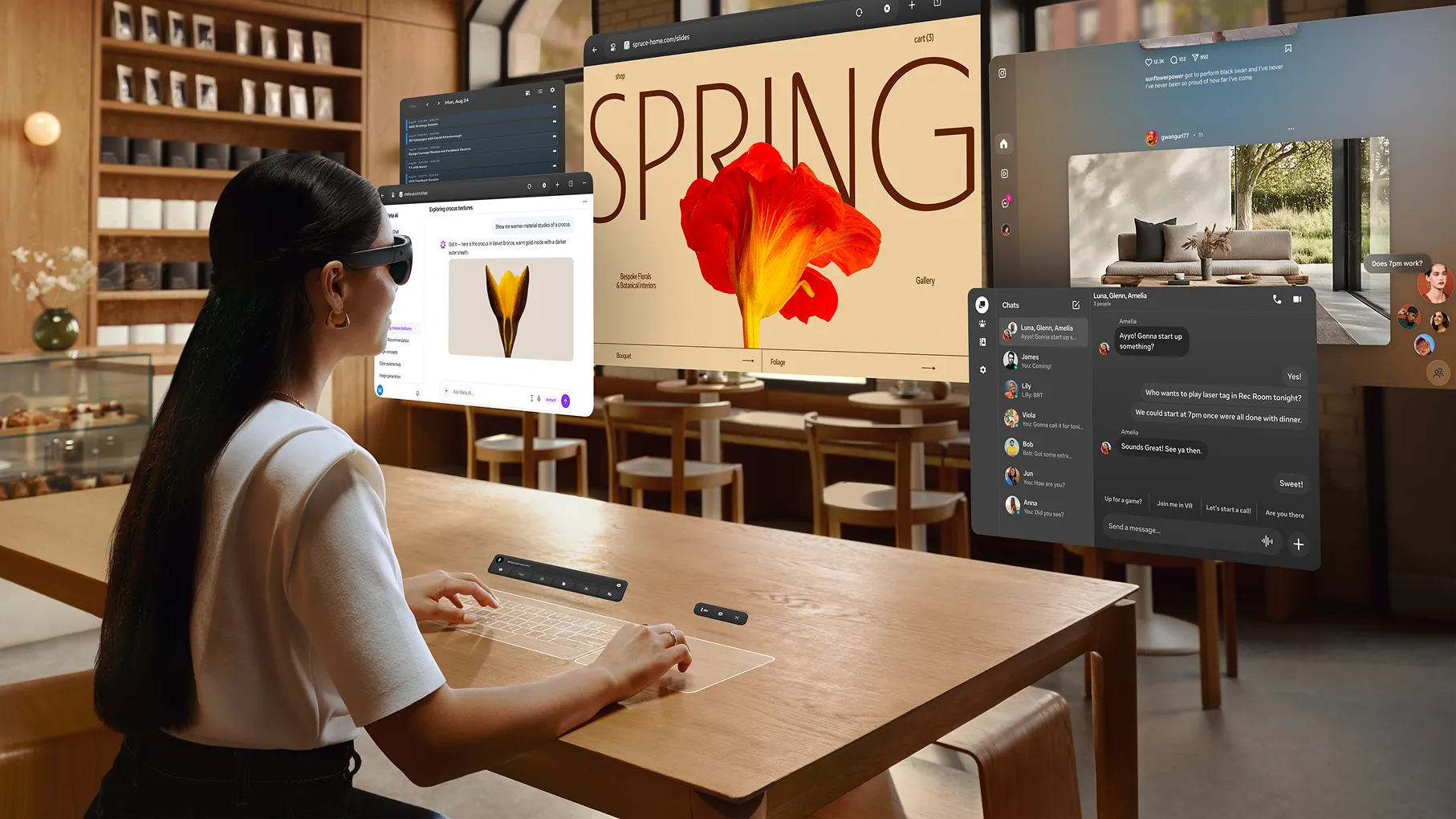
Meta is presenting the device as a spatial computing platform for productivity. Users can create one or multiple virtual screens anywhere and connect a Mac or Windows PC wirelessly or through USB-C. Meta says a flat physical surface such as a table can become a virtual keyboard and touchpad, reducing the need to carry additional peripherals.
Full-color passthrough allows the user to keep seeing their desk, keyboard, phone and surroundings while working. This places Meta VR Glasses in a category increasingly shared by devices such as Apple Vision Pro: XR hardware positioned as an alternative computing environment.
Entertainment is another major part of the strategy
The company says Meta VR Glasses are the first VR device to receive IMAX Enhanced certification. Meta has announced partnerships around 2D, 3D and immersive media with Disney+, YouTube, Prime Video, HBO Max, Paramount+, Peacock and other services.
It is also developing immersive sports experiences with partners including ESPN, MLB, NBC Sports, TNT Sports and UFC, targeting more than 100 immersive live sports events per year once the glasses launch. Cinema, sports, productivity and traditional applications all become reasons to wear the same hardware.
Hologram brings Codec Avatars closer to a product
Meta VR Glasses will include a feature called Hologram, creating a photorealistic digital representation of the user for video calls. Meta says the system reproduces real-time expressions and reactions and works with calling apps from WhatsApp to Zoom Workplace; people on a conventional computer or phone see the holographic representation on their normal display.
A new middle ground in XR hardware
Meta VR Glasses do not fit neatly into existing categories. They are not lightweight AI glasses, not conventional AR display glasses and, despite running the Quest ecosystem, they no longer look like a conventional VR headset.
- Displays and sensors remain on the face.
- Compute, storage and battery move to an external puck.
- Input shifts toward eyes and hands.
- The existing Quest software ecosystem remains intact.
The result suggests another direction for spatial computing: distributing the hardware around the body instead of concentrating everything on the head.
Spring 2027 will test whether lighter VR changes usage
Meta VR Glasses go on sale in spring 2027 for $1,299.99 in the United States. At that price, this is not a mass-market replacement for Quest 3 but a premium device built around a different proposition: where the hardware sits, how users interact with it and how long they may realistically want to wear it.
- Announced: September 23, 2026 (Meta Connect 2026)
- Availability: spring 2027
- Price: $1,299.99 USD
Sources
- Meta — Introducing Meta VR Glasses, A New Era for Virtual Reality (official announcement: specifications, architecture, pricing and launch).
- Meta Newsroom — The Biggest News From Connect 2026.
- Meta Horizon OS Developers — VR is Expanding. Start Building for Meta VR Glasses Today (v207 SDKs).
- UploadVR — Meta VR Glasses Officially Announced, Shipping Spring 2027 For $1300.
Editorial coverage of industry news and developments across spatial computing and immersive technologies. Every story is reviewed by a second editor, and hardware claims are checked against manufacturer documentation before publication.
Related reading
Meta Connect 2026 puts AI glasses, VR and the next generation of XR development in focus
Meta Connect 2026 takes place September 23–24 with AI glasses, VR, Meta Horizon and AI technologies at the center of the event. Beyond potential hardware announcements, Meta is also preparing developers for new ways to build software across wearables and immersive environments.
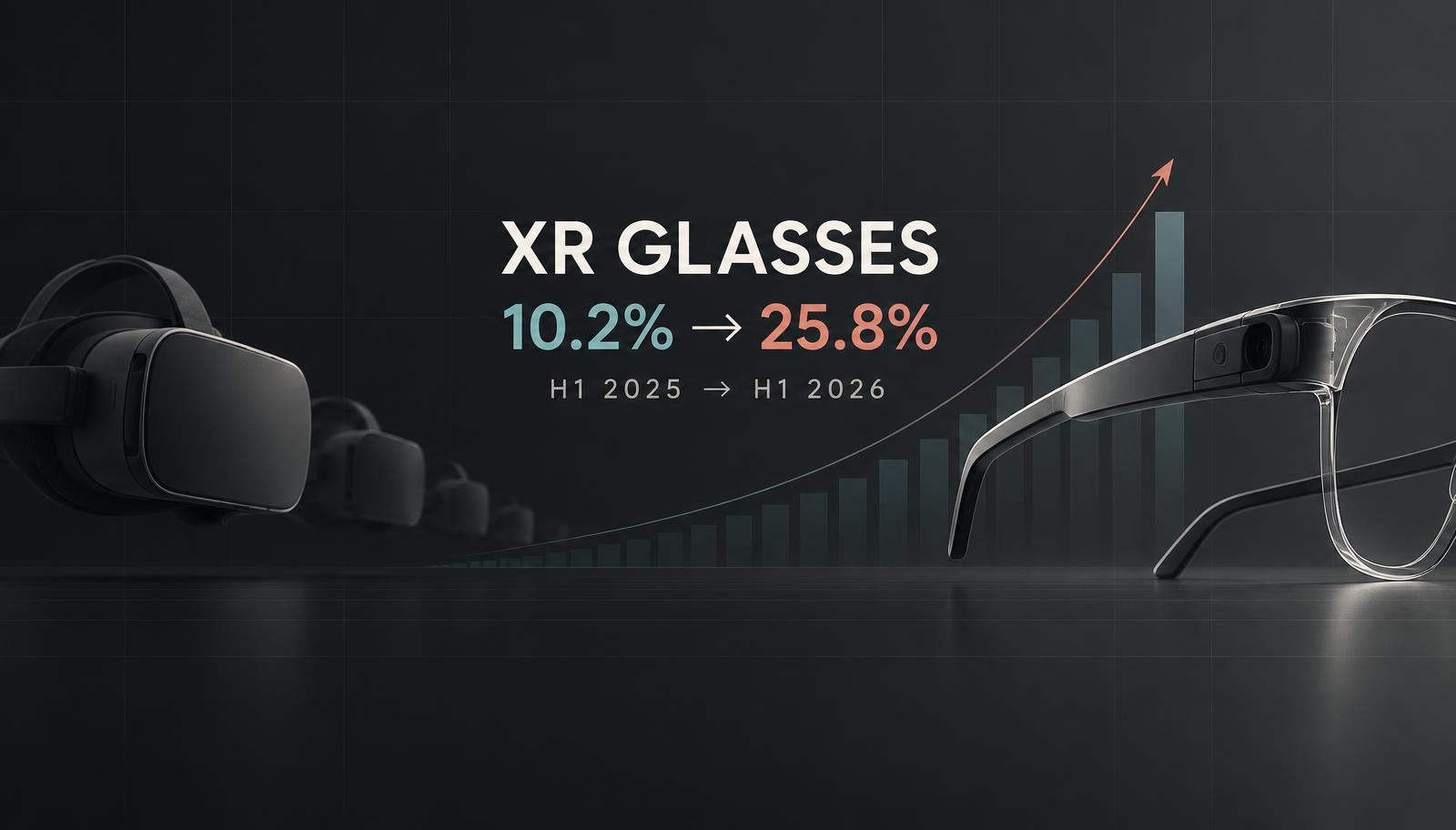
XR glasses gain ground as global headset shipments fall 38.7% in the first half of 2026
New Omdia data shows a major shift inside the XR hardware market. Global XR headwear shipments fell 38.7% year over year in the first half of 2026, but XR glasses more than doubled their share of the category as consumers increasingly favor lighter, lower-friction devices.
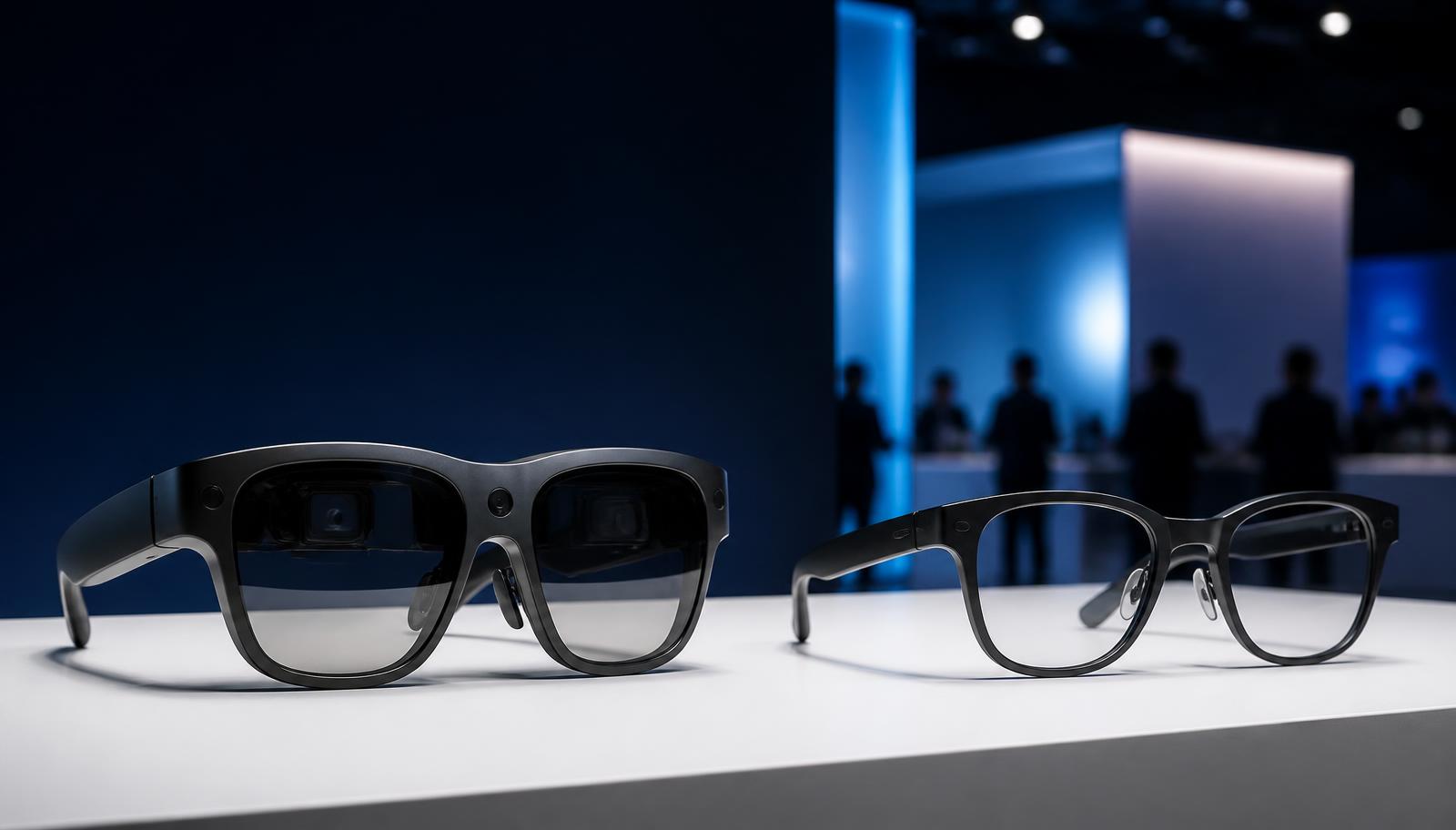
RayNeo GT Max and iO debut at IFA 2026: two different paths for the future of AR glasses
RayNeo has brought two very different approaches to wearable spatial computing to IFA 2026. The GT Max focuses on cinematic AR with a 59° field of view and Dolby Vision, while the 33-gram iO explores lightweight, camera-free AI assistance for everyday use.