Sneeze Brings Open Spatial Browsing Into Focus at Augmented Enterprise Summit 2026
The Metaverse Standards Forum and RP1 brought the Open Metaverse Browser Initiative into focus at Augmented Enterprise Summit 2026. Its open-source Sneeze engine and Artemis browser propose spatial experiences accessed through URLs, shared environments and interoperable 3D services.

Original AI-generated editorial illustration based on OMBI architectural concepts; not a screenshot of Sneeze or Artemis.
Key takeaways
- Sneeze is an Apache 2.0 open-source spatial browser engine introduced in June 2026; Artemis followed in July.
- The October 13–15 Augmented Enterprise Summit in Atlanta showcased the initiative, not its initial software release.
- Spatial fabrics aim to make shared 3D environments accessible through URLs and organization-controlled infrastructure.
- Multi-origin composition brings together independent content providers, with isolated execution environments.
- OpenXR, glTF, WebAssembly and SPIR-V provide foundations; universal headset compatibility and production enterprise readiness are not established.
What if spatial experiences worked more like websites?
Most people can open a website without knowing which framework was used to create it.
A page developed with one set of tools can be accessed through a browser built by another company.
That interoperability has been one of the foundations of the modern web.
Spatial computing does not yet offer the same level of consistency.
A three-dimensional application may be developed for a specific headset, operating system or proprietary platform.
Users often need to install dedicated applications.
Developers may need to adapt the same experience for multiple devices.
Organizations can become dependent on individual software ecosystems to maintain access to their spatial content.
The Open Metaverse Browser Initiative (OMBI) is attempting to address this fragmentation.
During Augmented Enterprise Summit 2026, held October 13–15 in Atlanta, RP1 participated in the event on behalf of the initiative, highlighting its open-source Sneeze browser engine.
The Metaverse Standards Forum confirmed RP1's presence at booth 320, where visitors could learn about the initiative and the browser technology.
The project proposes a model in which spatial environments can be accessed and composed through open infrastructure rather than requiring a separate application for every experience.
What is Sneeze?
Sneeze is an open-source browser engine designed specifically for spatial computing.
It was introduced in June 2026 by RP1 and the Metaverse Standards Forum through OMBI.
The engine is distributed under the Apache 2.0 license.
Its purpose is to provide foundational technology for applications that access and render spatial environments.
Conventional browser engines such as Blink, WebKit and Gecko primarily evolved around web documents and associated multimedia content.
Sneeze is being developed for a different interaction model.
Instead of organizing the experience exclusively around pages, the engine is intended to support persistent three-dimensional environments, spatial services and content associated with physical locations.
The objective is not simply to display 3D models inside a browser window.
It is to establish a shared foundation through which different providers can contribute content and functionality to the same spatial environment.
The engine is being designed to support rendering, secure execution, networking, XR device access and interoperability with established technical standards.
From websites to spatial fabrics
One of the central concepts behind Sneeze is the spatial fabric.
A conventional website organizes content through pages, resources and addresses.
A spatial fabric organizes content around a three-dimensional environment.
That environment could represent a physical building, an industrial facility, a public space or an entirely virtual location.
A spatial fabric can contain geometry, digital objects, contextual information and services associated with specific positions.
The idea is that an organization could host this information using infrastructure it controls.
Users would then access the environment through a compatible browser.
The browser could connect directly through a URL.
In future implementations, it could also identify relevant spatial content based on a user's physical location.
This would allow digital information to be associated with places rather than remaining isolated inside individual applications.
For example, an industrial facility could provide a spatial representation of its equipment.
Different software providers could contribute maintenance instructions, operational information or navigation services.
A compatible browser would be responsible for assembling the relevant information into a coherent experience.
The model is still under development, but it establishes a different approach to organizing spatial content.
Artemis provides the first browser implementation
Sneeze is the underlying engine.
Artemis is a native browser built using that technology.
RP1 launched Artemis on July 6, 2026, providing developers and enterprises with an initial implementation of the spatial browsing concept.
The first release supports several foundational capabilities.
Developers can create a limited spatial fabric and host it on their own infrastructure.
Users can navigate to spatial environments through URLs.
The browser can also load content from multiple independent operators into a shared scene, with isolated execution environments.
These capabilities demonstrate the underlying architectural approach.
However, the initial version does not provide every feature described in the broader OMBI vision.
More advanced embedded spatial services and other capabilities remain under development.
The July launch announcement specifically identified the October Augmented Enterprise Summit as an opportunity for a broader showcase of the browser's capabilities.
That makes the event an important step in the project's public development, although no independently verified new feature release has been established from the summit itself.
Multiple providers inside one spatial environment
One of the more technically interesting aspects of Sneeze is its approach to multi-origin spatial composition.
Traditional XR applications commonly package their content and logic within a single application environment.
Sneeze is being designed to support content originating from multiple independent providers.
Consider a digital representation of a factory.
The physical environment could be maintained by the facility operator.
A separate provider could supply equipment information.
Another could provide safety instructions.
A third could offer an AI-based assistance service.
The proposed architecture would allow these components to coexist within the same spatial environment.
This is conceptually similar to the way a web page can combine content and services from different sources.
However, three-dimensional composition introduces additional requirements.
Digital objects must have consistent spatial relationships.
The system must determine which content is visible.
Interactions must remain coherent.
Different providers must not be able to execute unrestricted code within the same environment.
These challenges explain why Sneeze includes components for secure execution, rendering and spatial networking.
The technology builds on existing standards
Sneeze does not attempt to replace every existing XR standard.
Instead, its architecture incorporates technologies from several established ecosystems.
The project's published source code identifies components supporting OpenXR, WebAssembly, SPIR-V, glTF and other technologies.
These standards address different technical requirements.
OpenXR provides an interface between applications and compatible XR runtime systems.
glTF supports the exchange and delivery of three-dimensional assets.
WebAssembly provides a way to execute compiled code within controlled runtime environments.
SPIR-V provides an intermediate representation for shader and compute programs.
The project also references standards and technologies associated with geospatial positioning, rendering and networking.
Combining these components into a browser engine is intended to reduce the amount of proprietary infrastructure required to deliver spatial experiences.
However, the presence of open standards does not automatically guarantee compatibility with every headset or existing XR application.
Actual interoperability depends on the capabilities implemented by the browser, supported runtimes and the standards adopted by participating developers.
Sneeze remains an evolving implementation rather than a universal replacement for current XR platforms.
Why enterprises need interoperable spatial infrastructure
Enterprise XR frequently involves applications that must remain operational for years.
Industrial training systems, maintenance tools and digital twins may be connected to expensive physical infrastructure.
Organizations also need to manage security, software updates, hardware replacement and long-term access to data.
Dependence on a single application platform can introduce additional risks.
A headset may be discontinued.
An operating system may change its requirements.
A software vendor may discontinue a service.
A proprietary file format may become difficult to maintain.
Open standards can help reduce some of these dependencies by separating content from a particular implementation.
OMBI's proposed model gives organizations greater control over where spatial information is hosted and how it is accessed.
It also creates the possibility of using different client applications with the same underlying spatial content.
These are architectural objectives rather than guarantees of current enterprise readiness.
For large-scale adoption, organizations would still need reliable identity management, access controls, performance, content governance and security validation.
Spatial browsing and digital twins
Digital twins are one area where a browser-based spatial infrastructure could become useful.
Many digital twin platforms already provide detailed three-dimensional representations of buildings, industrial equipment and infrastructure.
However, those representations are often accessed through proprietary applications or specialized viewers.
A standardized spatial browsing layer could potentially separate the representation of an environment from the tools used to inspect it.
Different applications might then access the same spatial context while providing different functions.
A maintenance technician could inspect equipment information.
An engineer could review a component's position.
A remote collaborator could examine the same environment from another location.
The spatial context would remain shared even if the applications and interfaces differed.
This is part of the longer-term vision behind OMBI.
It should not be interpreted as evidence that Sneeze already supports every existing digital twin platform or industrial data format.
Those integrations would require specific implementations.
Open source does not mean finished infrastructure
The Sneeze source code is publicly available on GitHub.
The repository includes the engine's architecture, build instructions, dependencies and technical documentation.
The project uses a modular structure, allowing the engine to be incorporated into host applications.
Its published architecture includes rendering, XR device access, network communication and sandboxed code execution.
This provides a technical foundation for experimentation and further development.
However, the availability of source code is different from the maturity of a production platform.
Developers still need to evaluate supported environments, build requirements, security properties and the capabilities available in the current implementation.
The broader spatial browsing ecosystem will also depend on participation from hardware manufacturers, content providers and standards organizations.
A common engine becomes more valuable as additional compatible software and services are developed.
Augmented Enterprise Summit 2026 provides industry exposure
The Augmented Enterprise Summit brought together companies working across XR, AI, digital twins, industrial visualization and related technologies.
The 2026 edition took place in Atlanta from October 13 to 15.
Its agenda focused on practical enterprise applications, including training, remote support, operational workflows and integration with existing systems.
Within that context, the Open Metaverse Browser Initiative represents an infrastructure-oriented approach to spatial computing.
Rather than concentrating on a particular headset or immersive application, it addresses how spatial experiences might be delivered and accessed across platforms.
The Metaverse Standards Forum's participation connected the initiative with enterprise developers, technology providers and organizations evaluating XR deployment.
The event was not Sneeze's initial release, but it provided a relevant setting for presenting the project to an enterprise audience.
Toward an open spatial web
Spatial computing has advanced through improvements in hardware, real-time rendering, tracking and interactive software.
Yet the ecosystem remains fragmented.
Users still encounter different application stores, device requirements and proprietary development environments.
Sneeze proposes a different architectural foundation.
Spatial environments could be published and accessed through interoperable infrastructure.
Different providers could contribute services to shared environments.
Organizations could retain greater control over their spatial data.
And compatible devices could access content without requiring a separate application for every location or service.
The project remains at an early stage, and its broader ambitions have not yet been demonstrated across the full diversity of commercial XR devices.
Nevertheless, the Open Metaverse Browser Initiative addresses a fundamental question for the industry.
If spatial computing becomes a widespread computing medium, how will people access its content without depending on a separate closed ecosystem for every experience?
Sneeze and Artemis represent one open-source attempt to answer that question.
Sources
- Metaverse Standards Forum — AES 2026 participation, Atlanta, October 13–15; RP1 at booth 320. https://metaverse-standards.org/event/augmented-enterprise-summit-2026/
- Metaverse Standards Forum — Sneeze introduction and OMBI overview. https://metaverse-standards.org/news/press-releases/metaverse-standards-forum-introduces-sneeze-the-worlds-first-open-metaverse-browser-engine/
- Sneeze — Official open-source engine repository, license and architecture. https://github.com/MetaverseStandards/Sneeze
- RP1 — Artemis launch announcement, July 6, 2026; initial capabilities and limitations. https://www.businesswire.com/news/home/20260706640660/en/RP1-Launches-Artemis-the-Worlds-First-Native-Metaverse-Browser
Editorial coverage of industry news and developments across spatial computing and immersive technologies. Every story is reviewed by a second editor, and hardware claims are checked against manufacturer documentation before publication.
Related reading

Meta is introducing a different kind of smart glasses
Ray-Ban Meta Audio begins shipping at $349: camera-free, display-free smart glasses built around open-ear audio, voice interaction and Meta's AI assistant.
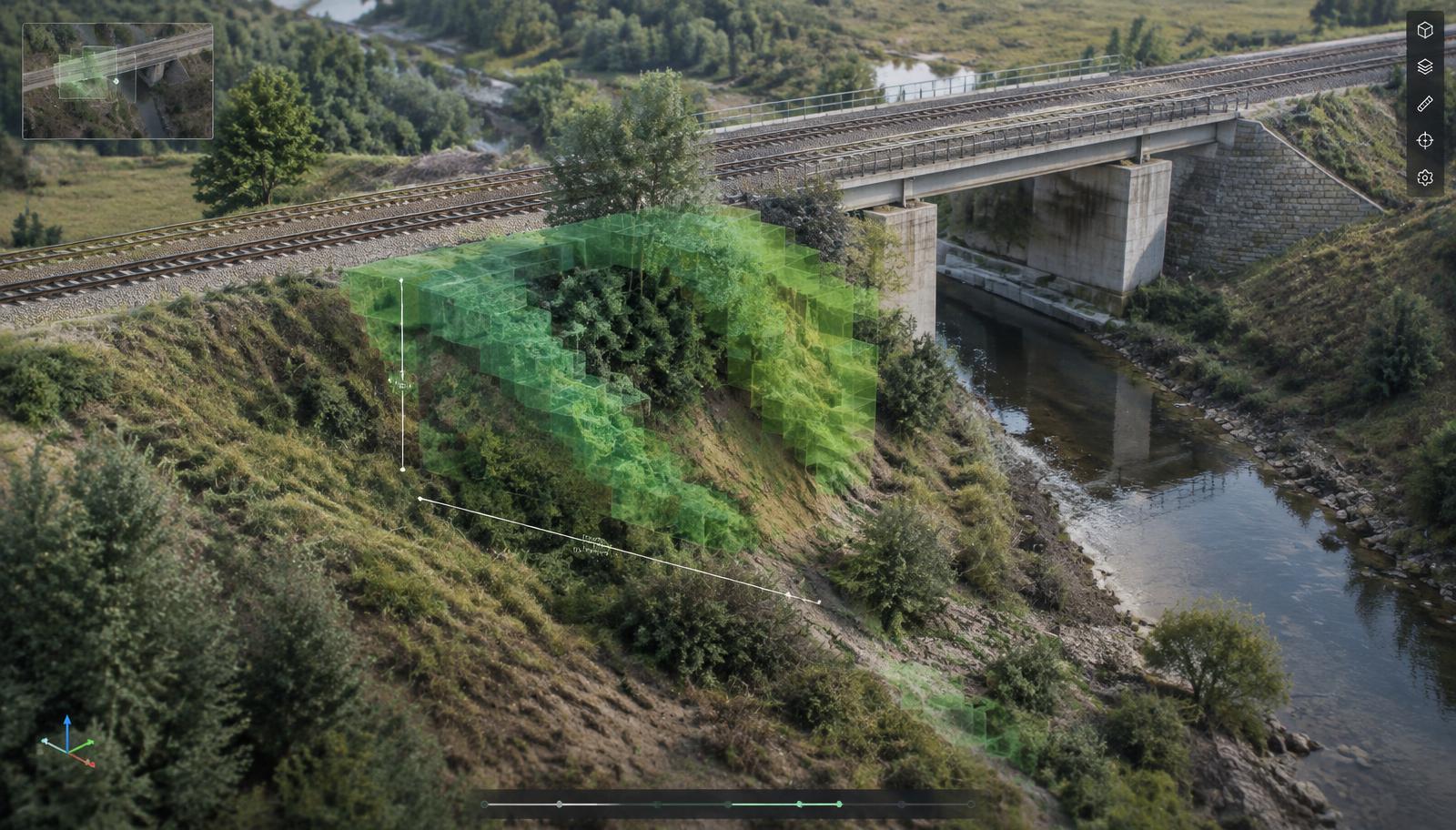
TRANCITY Nebula introduces 3D spatial change detection and new digital twin analytics tools
CalTa announces new spatial analytics capabilities for TRANCITY Nebula, including voxel-based change detection, 3D visualization, digital twins and environmental data overlays.

Google and Unity introduce Unity Spark, bringing AI-powered creation closer to interactive 3D development
Google and Unity announce Playground and Unity Spark, combining generative AI, natural language creation and Unity's real-time 3D engine to simplify interactive development.